
So you've decided you want to learn Latin dancing. Maybe you saw a performance that blew you away, maybe a friend dragged you to a salsa night and you caught the bug, or maybe you're just looking for a fun way to get active and meet people. Whatever brought you here, you're probably staring at a list of dances and wondering where on earth to start.
The good news is that there's no wrong answer. The better news is that some answers are smarter than others, and that's what this post is about. The right starting point depends on your goals, how you learn, and what kind of dancing you actually want to do with the skill once you have it. We'll walk through all of it.
Latin dancing covers a wide range of dances. At Vegas Ballroom Dance, we work with two broad categories: the five International Latin dances recognized by the World Dance Council, which are cha cha, rumba, samba, paso doble, and jive, and a collection of social Latin dances including salsa, bachata, merengue, and mambo, among others. The two categories overlap in some ways and diverge in others, and knowing the difference matters when you're choosing where to start.
Let's break them all down.
The International Latin Dances
These five dances are danced all around the world, and the ones you see danced by professionals at Latin Dance competitions, and on Dancing with the Stars. They have standardized technique, footwork, and syllabus levels, which means there's a clear path of progression from beginner to advanced. That structure is one of the reasons they're such a great foundation for anyone serious about dancing long-term.
Rumba: The Easiest of the Five
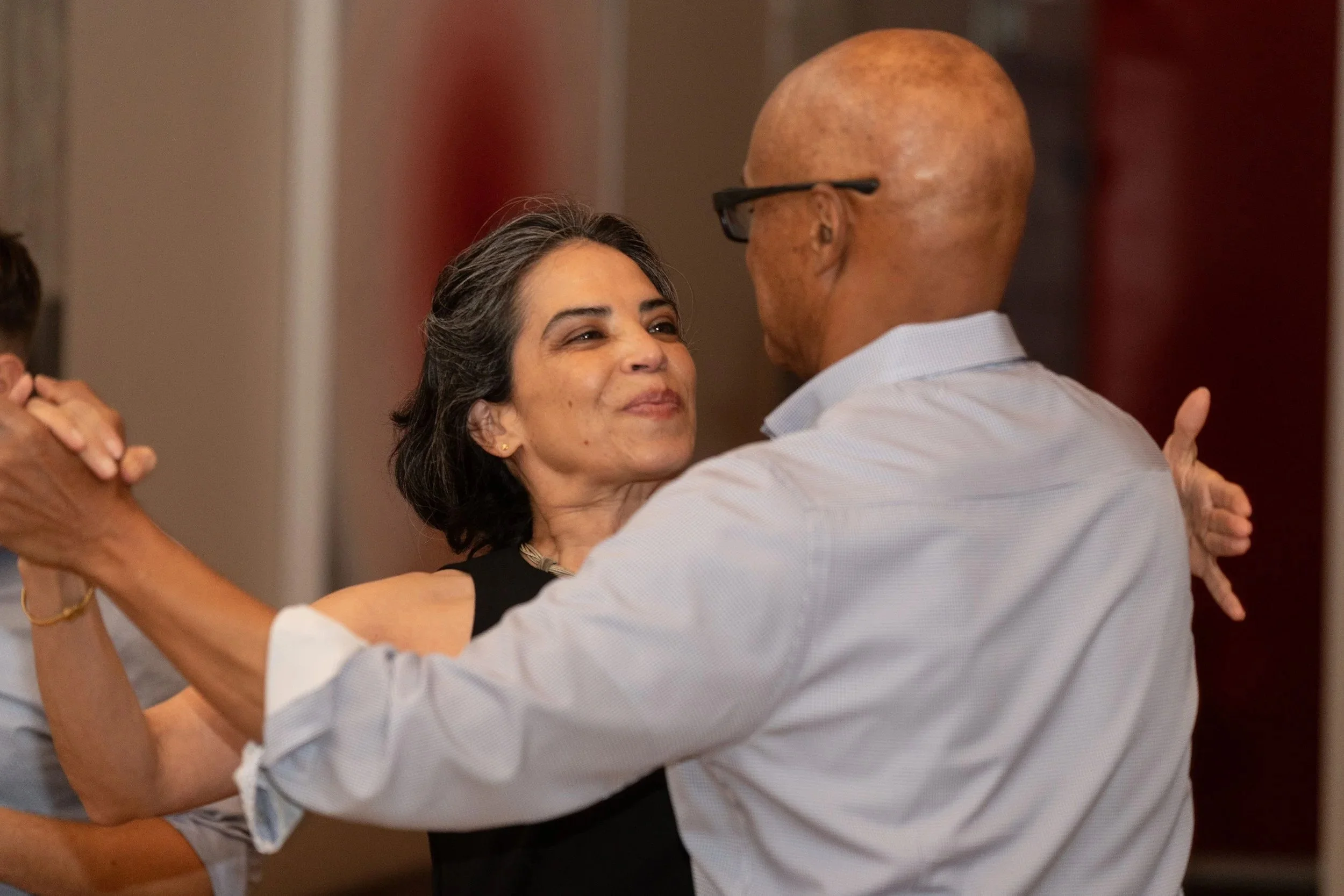
If you asked us to rank the five International Latin dances strictly by ease of learning, rumba would sit at the top. It's the slowest of the five, which gives you time to think, find the beat, and work on your connection with a partner. The basic step is accessible, the timing is forgiving, and the music is easy to identify once you know what to listen for.
Rumba is also the foundation from which a lot of Latin technique is taught. The hip action, body movement, and partner connection that you develop in rumba show up in almost every other Latin dance. Teachers at studios around the world use rumba as the entry point for this reason.
But even with all this, it isn’t our recommended starting dance. If you would like to know more, read on!
Cha Cha: Our Recommended Starting Point
Cha cha is a step up in difficulty from rumba, but not by a huge margin. It's faster, it has a distinctive extra beat that takes a bit more brain power, and it has a lot more footwork to keep track of. That said, it's completely manageable for a brand new dancer within a single lesson, and it's one of the most rewarding dances to learn because you start feeling the music quickly and the steps have a satisfying snap to them.
Here's why we recommend starting here rather than with rumba: once you know cha cha, rumba is easy to add. The two dances share a lot of DNA. The hip action is related, many of the figures translate across both dances, and the main adjustment is simply slowing things down and smoothing out the timing. Most students who come through cha cha pick up rumba quickly and with a lot of confidence.
The reverse order isn’t as easy. Students who start with rumba often struggle when they try to speed things up for cha cha. The extra beat, the quicker weight transfers, and the sharper footwork all become obstacles when you haven't built your muscle memory with them from the beginning. It's not impossible, but it's a steeper climb.
Cha cha also has a lot going for it outside the studio. It's a social dance. You'll hear cha cha music at parties, on cruise ships, at Latin nights, and in countless other places where people are dancing. Learning it means you'll actually be able to use it.
Samba: Doable, But More Demanding
Samba is the heartbeat of Brazil, and it's one of the most fun dances you'll ever see performed at a high level. It's also one of the more technically demanding dances for a beginner to pick up.
The main challenge with samba is that there are many things going on at the same time. The steps move quickly, and the signature bounce action, called the samba bounce, requires the knees and ankles to work in a specific rhythmic way that takes time to develop. When you watch an experienced samba dancer, the bounce looks effortless and organic. When you first try to replicate it, it tends to feel mechanical and a bit awkward.
That said, samba is absolutely something we can teach beginners. The key is working with simplified technique in the early stages, focusing on the steps and the joy of the dance before worrying too much about perfect bounce action. You'll still look and feel like you're samba dancing, and the technique develops naturally over time. If you're drawn to samba, don't let the difficulty level discourage you. We can make it happen.
Jive: Fast and Fiery
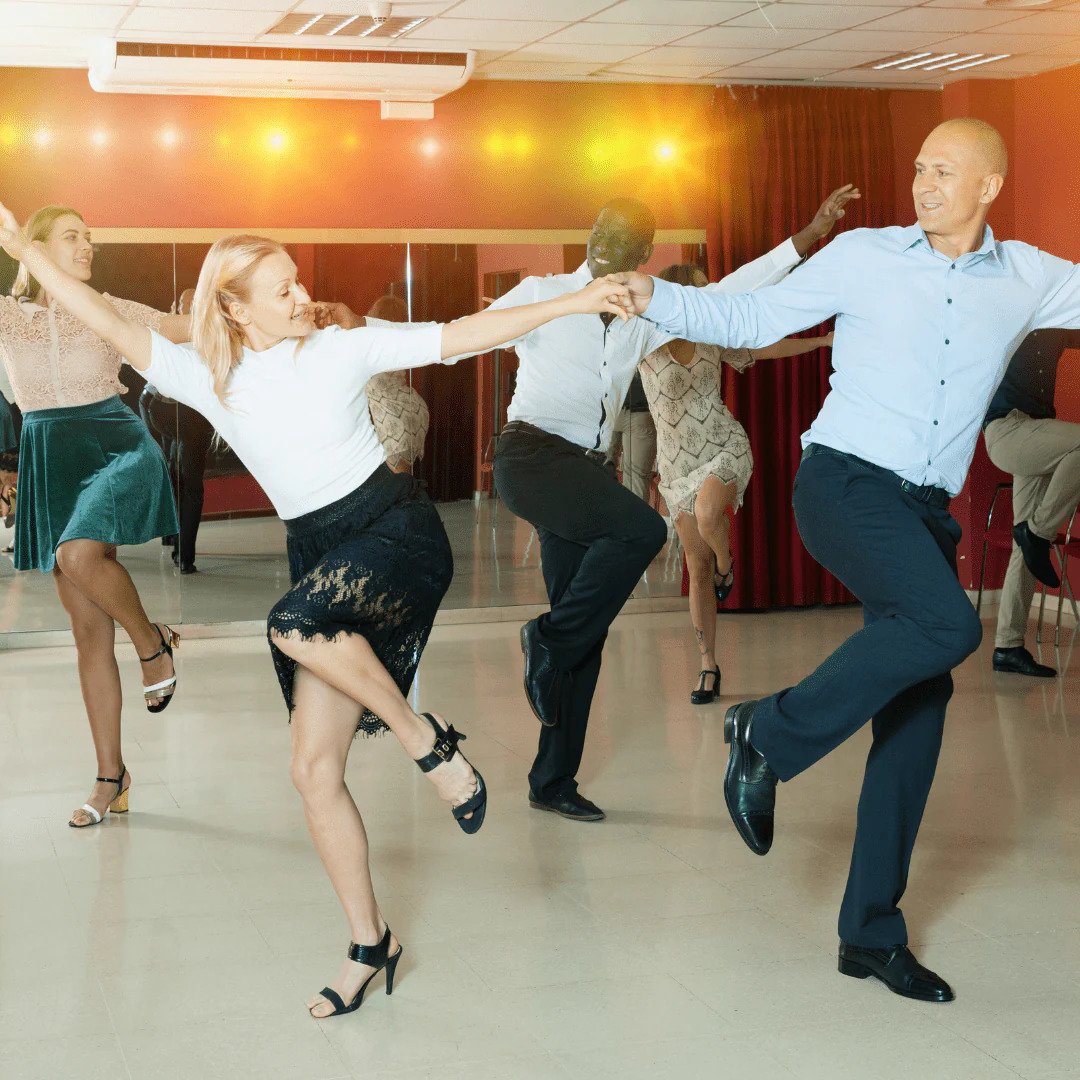
Jive is, by most measures, the most physically demanding of the five International Latin dances. It's performed at a fast tempo, the footwork rhythm is intricate, and the energy level required to do it well can feel genuinely athletic. Watch a professional level jive and you'll understand why dancers look absolutely spent by the end of ninety seconds!
For a complete beginner, jumping into full-speed jive is a lot. The good news is that we don't have to start there. Slowing the music down dramatically makes jive very accessible, and the patterns themselves are not complicated once you remove the tempo from the equation. We use this approach regularly with students who come in specifically wanting to learn jive, often because of what they've seen on television dance competitions.
Once the footwork feels natural at a slower speed, we gradually work the tempo up. By the time you're dancing to actual jive music, your feet know what to do and you can focus on the fun.
Paso Doble: Easy to Learn, But Not as Useful
Paso doble is the one International Latin dance we consistently recommend people hold off on as a starting point, though not because it is difficult. It is because it feels very different from all the other dances, and isn’t danced that much in the United States outside of dance competitions.
The footwork in paso doble is actually quite straightforward compared to jive or samba. The technique is simple, less complicated, and often more natural than the other dances, but it is so different from the other dances that learning Paso Doble doesn’t help very much with learning any other dance, whereas if you learn cha Cha you basically know rumba already, and even among samba and jive there are certain similarities that carry over.
Moreover, paso doble is almost never danced socially in North America. You won't find it at a Latin night. You won't hear a DJ drop a paso doble. It lives primarily in ballroom competition or social dancing in France, and unless you're planning to compete right out of the gate, there's limited opportunity to actually use the dance once you learn it. We love teaching paso doble and our students who compete perform it beautifully, but as a first dance for a beginner, the other four options give you more return on your investment.
The Social Latin Dances
Outside the core Latin dances, there's a whole universe of Latin social dances that are danced in clubs, at parties, at festivals, and in dedicated dance venues. These dances tend to be less formally structured than the International Latin dances, but are just as fun!
Salsa
Salsa is possibly the most danced Latin social dance in the world. Depending on the style it varies in timing and feel, but the basics are accessible and the payoff is enormous. A few lessons in and you can walk into almost any Latin club in Las Vegas and participate. Salsa is energetic, musical, and a great workout. It's also a dance with serious depth. You can spend years getting better at it, and the social salsa scene is active, welcoming, and always looking for new dancers.
Bachata
Bachata has exploded in popularity over the last decade and is now arguably as common as salsa at social dance events in Las Vegas and across North America. The basic step is simpler than salsa, the music is unmistakable once you know what to listen for, and the romantic, close-hold feel of the dance draws a lot of people in immediately. There are also different styles of bachata, including the traditional Dominican style, the more theatrical sensual bachata, and the fusion-influenced modern styles you see on social media. For pure ease of getting started, bachata might be the most accessible Latin partner dance there is.
Merengue
Merengue is the most straightforward of any Latin dance, but it is so simple that often people find it a less exciting than the other dances.If you can walk, you can dance merengue, so a lot of people who really feel they have two left feet find it is a great dance to start with. It's not a dance people typically specialize in or seek out as a primary style, but it's a fantastic confidence builder, a useful tool for working on partner connection, and a bridge toward the rhythmic sensibility that salsa and bachata require.
So What Should You Actually Do?
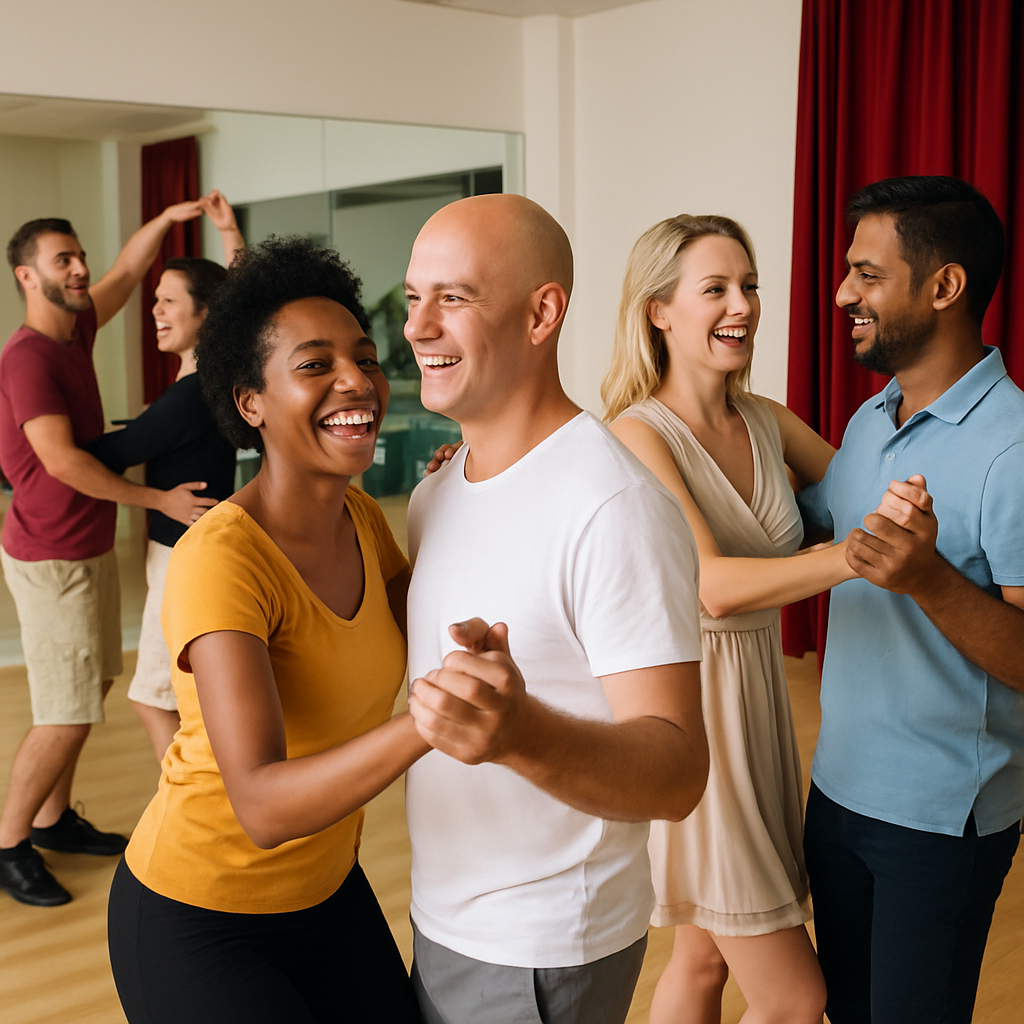
If your goal is to eventually move through multiple dances and build a real foundation in Latin dancing, we recommend starting with cha cha. You'll learn something that's genuinely fun and usable right away, and you'll build a technical base that makes every other Latin dance easier to learn afterward.
If you're more interested in social dancing right away, bachata or salsa are excellent entry points. You'll be on the social dance floor faster, and you can always add more dances over time.
If something specific is calling to you, whether it's the drama of samba or the fire of merengue, tell us. We teach all of it, and we're very good at adapting how we teach to where you are right now. Students at every level, from complete beginners to those returning after years away, come through our doors and leave dancing.
The most important thing is to start. The second most important thing is to start with a good teacher.
At Vegas Ballroom Dance, our instructors include national finalists and award-winning dancers with high levels of professional certification. We've helped people go from having never danced a step in their lives to dancing beautifully at weddings, competing on floors across the country, and simply having the time of their lives on a Saturday night. Whatever got you curious about Latin dancing, we'd love to be the place where that curiosity turns into something real.
Come take a class. We'll figure out the rest together.
