
Gentlemen: How to Choose Your First Pair of Dance Shoes
If you are just starting out in Ballroom or Latin dancing, you do not necessarily need a dedicated pair of dance shoes right away. Plenty of beginners take their first several lessons in regular shoes while they figure out whether this is something they want to stick with, and there is nothing wrong with that approach. But once you know you are going to keep dancing, a proper pair of dance shoes makes a real difference. They change the way your feet connect with the floor, how confidently you can lead, and how much control you have over your own footwork.
Before getting into the differences between Latin and Ballroom shoes, it helps to understand the things that apply to dance shoes generally: what the sole is made of, why that matters, how a dance shoe is supposed to fit, and what is actually going on inside the shoe that makes it perform the way it does. Once those fundamentals are clear, the differences between the styles make a lot more sense, and shopping for your first pair becomes a much less confusing process.
A quick note before we get into it: we are not sponsored by any dance shoe company, and nothing in this article is a recommendation of a specific brand or product. This is general guidance to help you understand what to look for when you go shopping, whether that is in person at a dancewear store or online.
Why Suede Soles Matter
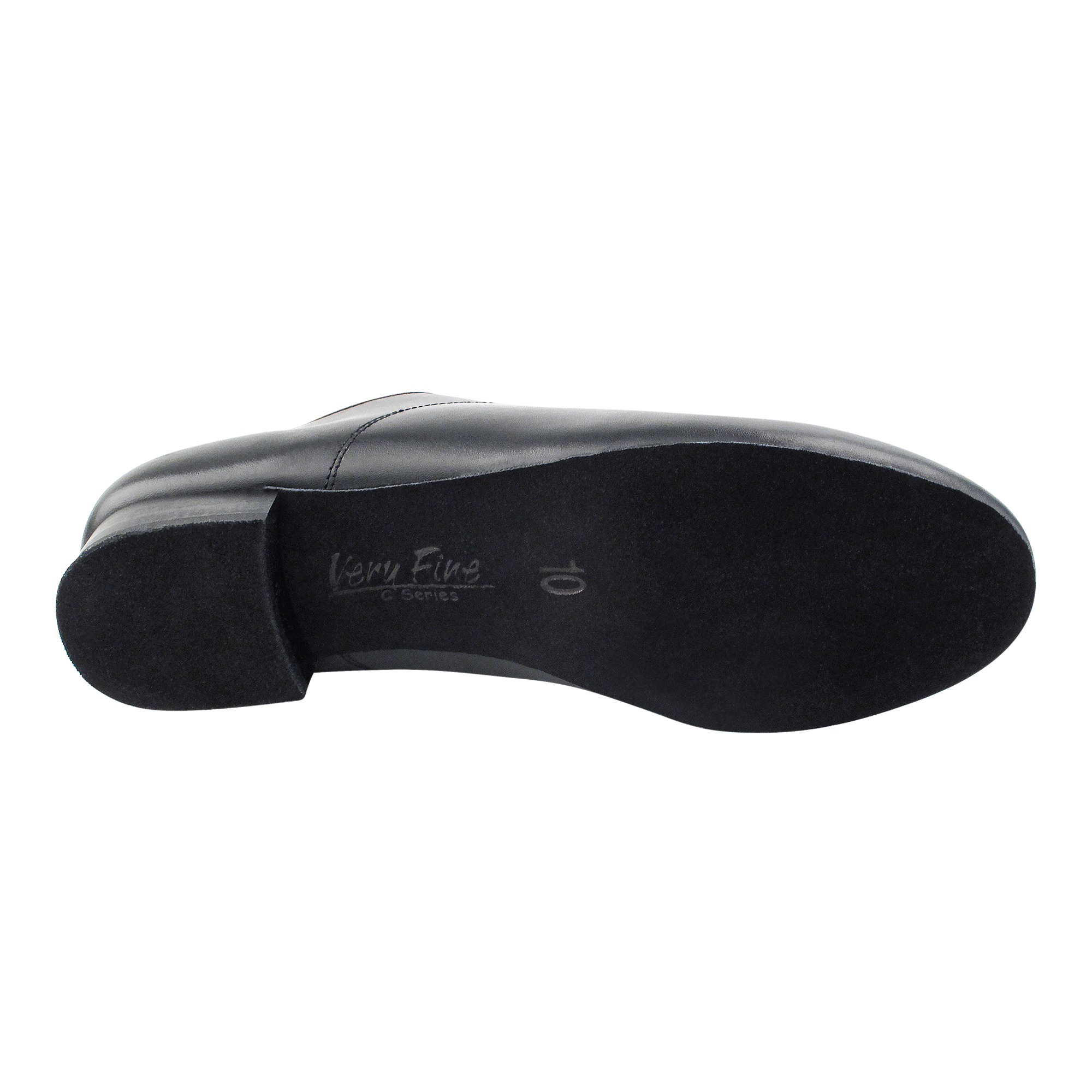
Men’s Ballroom Dance shoe in black leather, showing the suede sole
Nearly every dance shoe, regardless of style, has a suede sole, and this is one of the most important things to understand before buying a pair.
Suede creates a controlled balance of glide and grip that a dance floor requires, and it sits right in the middle between two materials that each fail in their own way. A plain leather sole, the kind found on a typical dress shoe, is actually too slippery on most dance floors. It glides easily but offers very little to push off against, which makes the floor feel unstable and unpredictable underfoot. A rubber sole, like the kind found on a typical athletic shoe, has the opposite problem. It grips the floor too well, which means the foot cannot swivel naturally, and turns end up requiring far more force through the knee and ankle than they should. Suede lands in between, offering enough grip to push off and change direction with confidence while still allowing the foot to rotate and slide smoothly through turns and pivots.
One rule worth knowing from the start is that suede-soled dance shoes should never be worn outside. Stepping onto pavement or any rough outdoor surface grinds grit directly into the suede and damages the fibres in a way that is difficult to reverse. Once that happens, the sole starts behaving unpredictably, sometimes grabbing the floor when you need it to slide, and sometimes sliding when you need it to hold. Treat your dance shoes as indoor-only footwear from the day you buy them.
What Is a Shank, and Why Does It Matter?
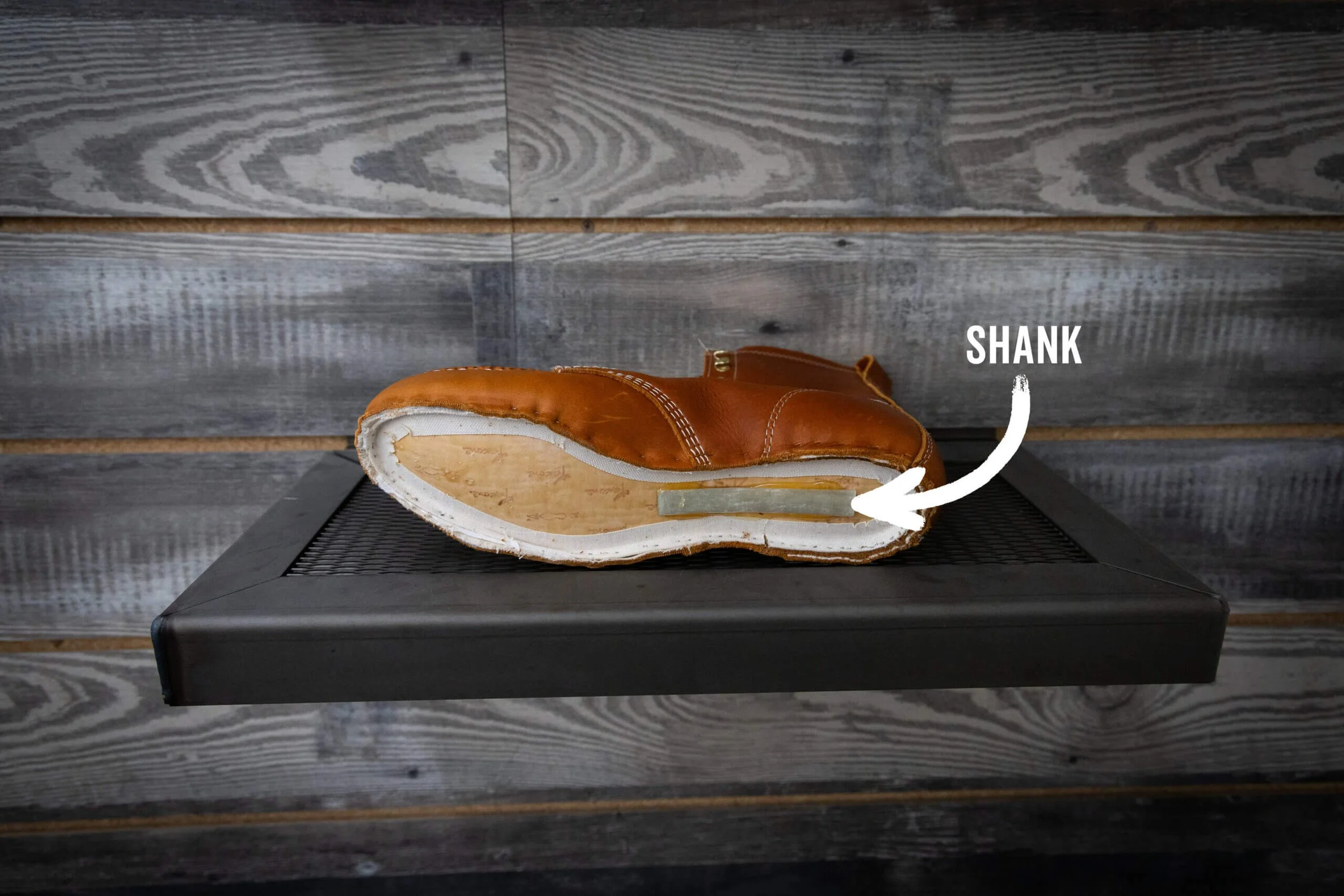
A shoe with the sole removed, exposing the shank
This is a term that comes up constantly when talking about dance shoes, and most people have never heard of it before they start shopping for a pair.
A shank is a strip of rigid material, often steel, fibreglass, or a stiff plastic, built into the sole of the shoe between the insole and the outsole. You cannot see it from the outside, but you can feel its effect the moment you put weight on the shoe. The shank's job is to control how and where the sole of the shoe is allowed to bend.
A shoe with a full shank running through the middle of the sole resists bending through the arch and only flexes naturally at the ball of the foot. This supports a smooth, controlled roll through the foot, from heel to toe, which is exactly the quality that good Ballroom technique depends on. A shoe with no shank, or only a short partial one, bends much more freely along its entire length. This allows the foot to point and arch far more dramatically, which is exactly what Latin dancing requires and what a heavily reinforced sole would prevent.
This single difference in construction, more than almost anything else, explains why a Latin shoe and a Ballroom shoe feel so different underfoot even when they look broadly similar from across the room. A shoe that feels stiff and resists bending in the arch when you press on it has a shank. One that folds easily along its length does not.
How Dance Shoes Should Fit
Dance shoes fit very differently from everyday shoes, and getting this right matters more than most new dancers expect.
A dance shoe should fit close to the foot, almost like a sock, with no dead space at the heel, no extra width on either side, and no gap across the top of the foot. The shoe and the foot should move as a single unit. Any looseness in the fit translates directly into a loss of control, because the foot is shifting around inside the shoe instead of the two moving together.
At the same time, a properly fitted dance shoe should never be painful. The toes need enough room to lie flat and stay relaxed without being squeezed or curled under. If a shoe is causing discomfort, the issue is the size or shape, not something that improves with a break-in period.
This often means going down a size from what you would normally wear in street shoes. A huge number of men walk around every day in shoes that are noticeably too large, because a little extra room feels comfortable for standing and walking and nobody ever has a reason to question it. That same room becomes a real problem in a dance shoe, where precision matters far more than casual comfort. When you go to try on dance shoes, do not assume your usual size is the right starting point. Expect to end up a half size or even a full size smaller, and judge the fit by the criteria above rather than by what feels roomy and familiar.
What Is a Shank, and Why Does It Matter?
This is a term that comes up constantly when talking about dance shoes, and most people have never heard of it before they start shopping for a pair.
A shank is a strip of rigid material, often steel, fibreglass, or a stiff plastic, built into the sole of the shoe between the insole and the outsole. You cannot see it from the outside, but you can feel its effect the moment you put weight on the shoe. The shank's job is to control how and where the sole of the shoe is allowed to bend.
A shoe with a full shank running through the middle of the sole resists bending through the arch and only flexes naturally at the ball of the foot. This supports a smooth, controlled roll through the foot, from heel to toe, which is exactly the quality that good Ballroom technique depends on. A shoe with no shank, or only a short partial one, bends much more freely along its entire length. This allows the foot to point and arch far more dramatically, which is exactly what Latin dancing requires and what a heavily reinforced sole would prevent.
This single difference in construction, more than almost anything else, explains why a Latin shoe and a Ballroom shoe feel so different underfoot even when they look broadly similar from across the room. A shoe that feels stiff and resists bending in the arch when you press on it has a shank. One that folds easily along its length does not.
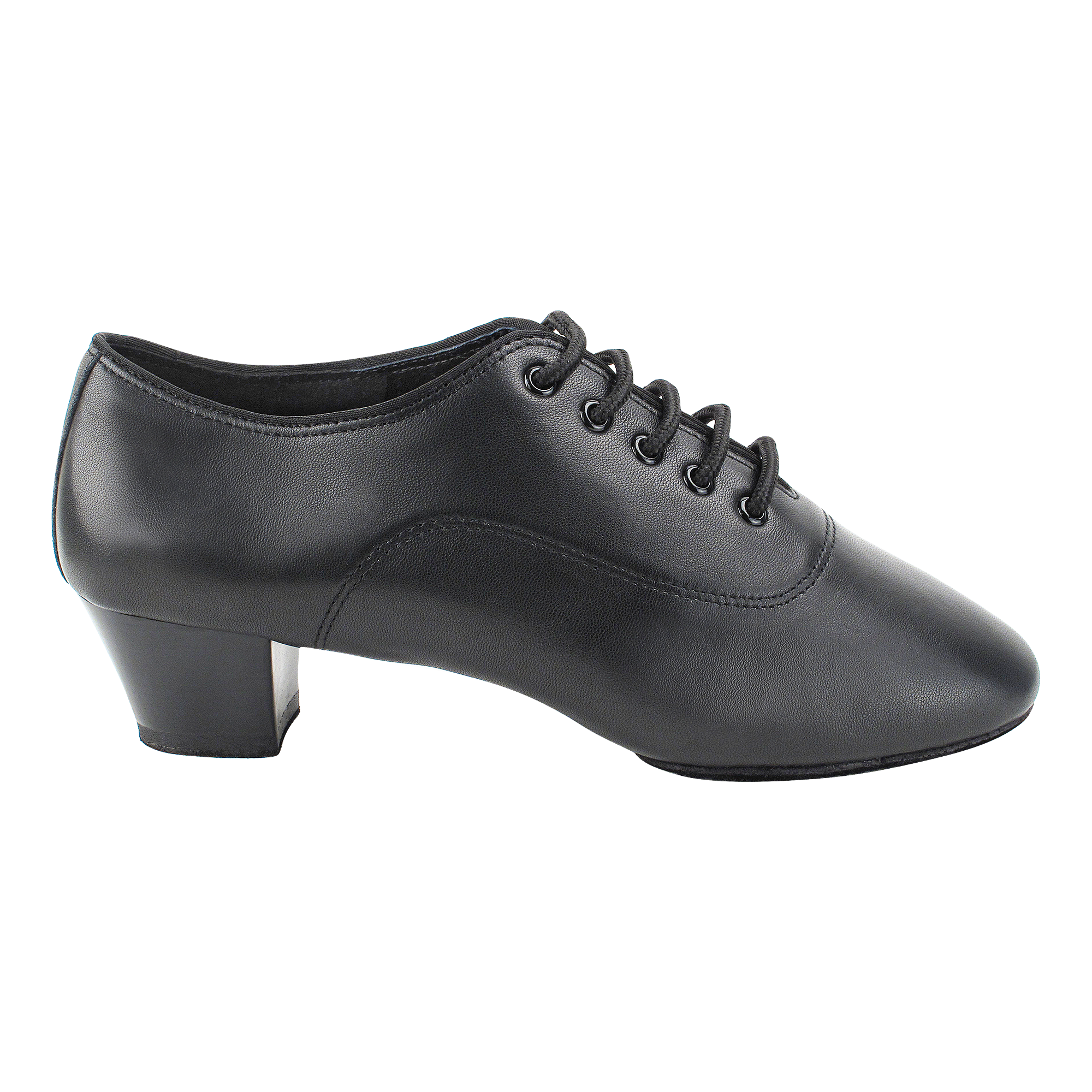
Men’s Latin Shoe
Latin Shoes
Men's Latin shoes are worn for dances like Cha Cha and Samba, and they are laced, with a low-cut, streamlined build.
The heel on a men's Latin shoe is typically 1 to 1.5 inches, noticeably higher than a Ballroom shoe. There are a few reasons for this. It shifts the weight of the body slightly forward, which suits the quick, precise footwork and hip action that Latin dancing depends on. It also makes it easier for the foot to point, since a higher heel naturally encourages the ankle and arch to extend. And because Latin dancing involves very few heel steps, there is little reason to keep the heel low the way Ballroom shoes do.
As covered above, most Latin shoes also have little to no shank, which gives the foot the freedom to articulate and point fully. This is one of the clearest structural differences between a Latin shoe and a Ballroom shoe, and it is a big part of why the two are not interchangeable even though they may look similar at a glance.
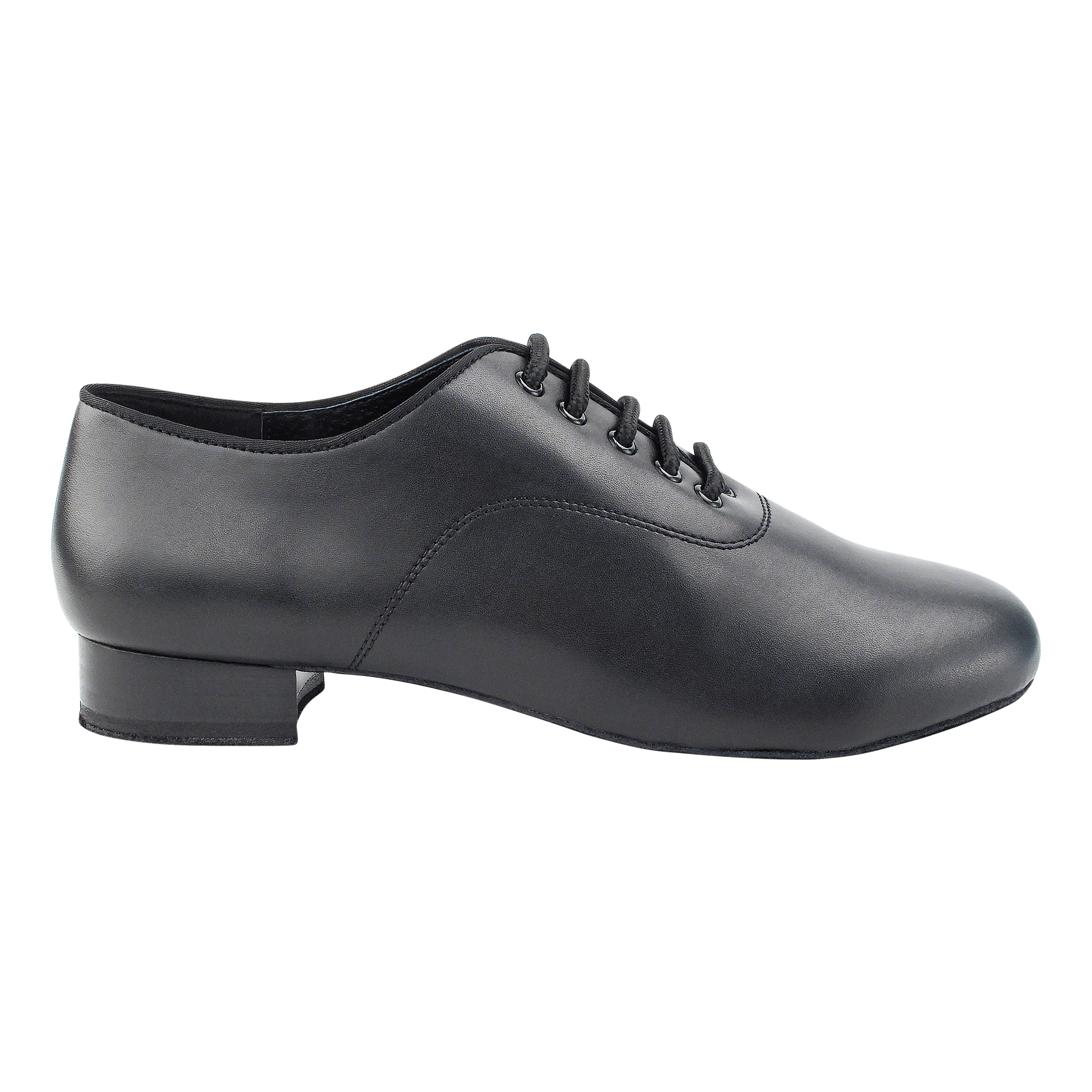
Men’s Ballroom Shoe
Ballroom Shoes
Ballroom shoes for men are worn for dances like Waltz and Tango, and the construction reflects very different priorities than a Latin shoe.
The heel on a men's Ballroom shoe is low, typically around half an inch, which is considerably lower than a Latin shoe. This lower heel makes heel-led steps, which are common throughout Ballroom technique, much easier to execute cleanly. Many Ballroom figures begin with the heel making contact with the floor, and a low, stable heel supports that kind of weight transfer far better than a higher one would.
Ballroom shoes typically do include a full shank running through the sole, which is the opposite approach from a Latin shoe. As explained above, this gives the sole the structure needed to roll smoothly through the foot, which is a defining quality of how the body moves through Ballroom dancing. Without that support, the foot has nothing to roll against, and the movement loses the controlled, continuous quality that good Ballroom technique relies on.
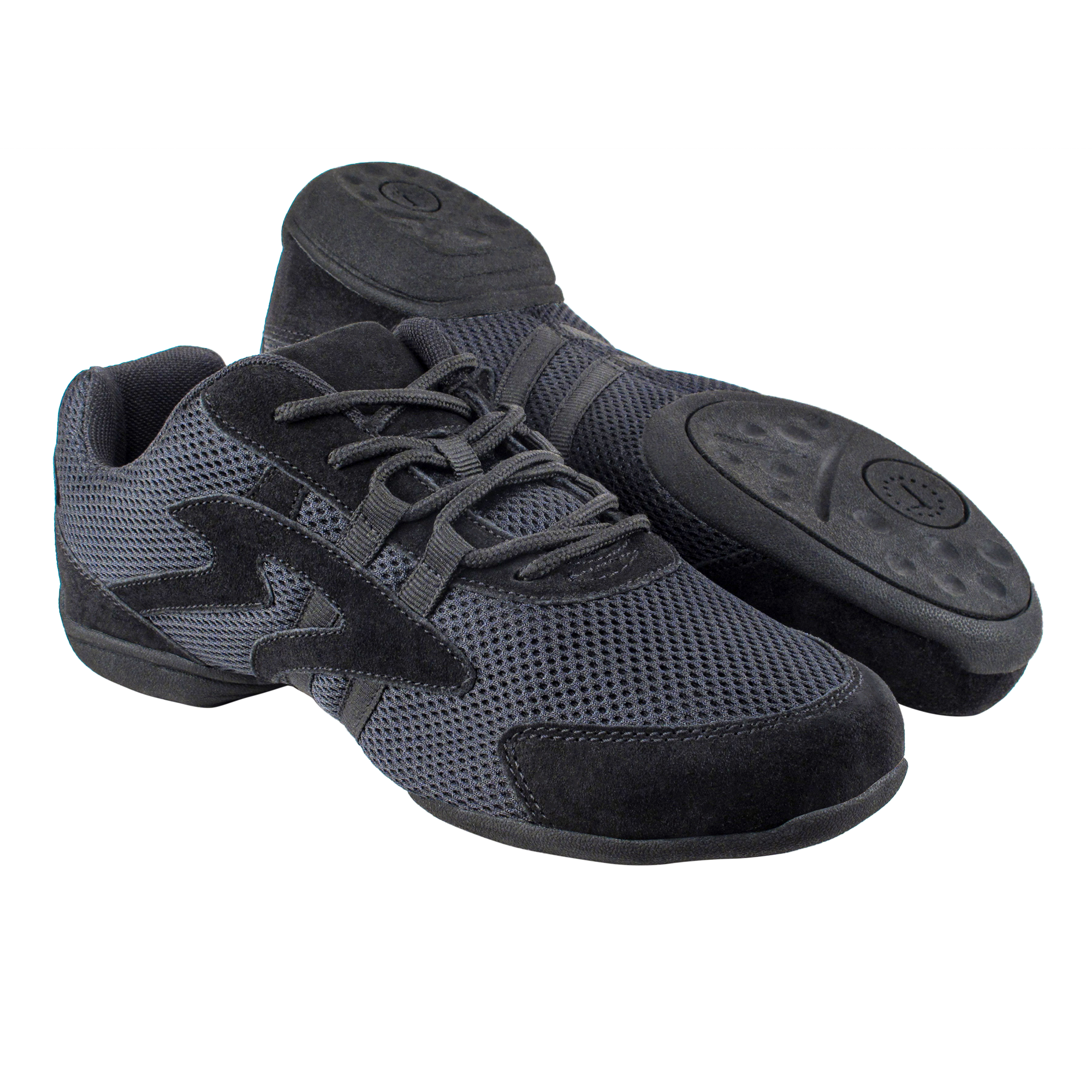
Practice sneakers, showing the polyurethane sole
Practice Shoes and Sneakers
These shoes are most useful for a few specific situations. Dancers dealing with foot problems, whether that is a structural issue, an old injury, or general discomfort, often find a dance sneaker far more comfortable than a Latin or Ballroom shoe, since the soles tend to be more cushioned underfoot. Dancers attending an intensive or a multi-day camp, where they may be on their feet dancing for eight hours at a stretch, often switch into a sneaker partway through the day. Teachers, who are frequently on the floor for hours at a time demonstrating and partnering with students, are another group that relies on practice shoes regularly for the same reason.
Construction varies more here than with Latin or Ballroom shoes. Some dance sneakers use a suede sole, while others use a polyurethane sole that offers a similar controlled glide without the same care requirements. Most are laced like other dance shoes, though a small number of slip-on styles exist as well. If none of these situations apply to you, a standard Latin or Ballroom shoe is still the better place to start.
Which Pair to Choose
If you can get both Ballroom and Latin shoes, that’s great, but if you are new to dancing and can only buy one to start, go with Ballroom shoes. They are the more versatile choice for a beginner, the lower heel is generally more comfortable for someone new to dancing in any kind of heel, and the technique you build in Ballroom transfers reasonably well as a starting point before you add Latin shoes later.
This is also simply a practical matter of budget. A new dancer who is still deciding how committed they are to this hobby is usually better served by one solid pair than by splitting the same budget across two pairs that are each a little lower in quality. Once you know you are sticking with it and want to dance both styles seriously, adding a pair of Latin shoes is a worthwhile next step.
Materials, Color, and What to Spend
Men's dance shoes have traditionally been made in black leather, and that remains the standard choice you will see most often, particularly in Ballroom styles. Black leather is versatile, looks appropriate in nearly any social or lesson setting, and is the safest default if you are buying a single pair and do not have a strong reason to choose otherwise.
Leather itself is valued for its durability and the way it molds to the shape of the foot over time. Some dance shoes, however, are made with microfiber instead of leather. This is a legitimate and increasingly common alternative, not a downgrade to be avoided. Many dancers find microfiber more comfortable right out of the box, since it tends to be lighter and softer than leather and does not require the same break-in period. The tradeoff is durability. Microfiber generally does not hold up as long as leather under regular wear, so a microfiber shoe may need replacing sooner than a comparable leather one. Neither material is the wrong choice; it is simply a question of whether you prioritize immediate comfort or long-term durability.
Patent leather is a separate consideration. It has a glossy, polished finish that many competitive dancers choose for stylistic reasons, since it has a sharp, formal look on the floor that photographs and performs well under stage lighting. It is also considerably harder to care for, scuffs easily, and shows wear in a way that ordinary leather and microfiber do not. For a newcomer who is still learning how to handle and store a pair of dance shoes, it is generally better to skip patent leather for the first pair and consider it later if you find yourself competing or performing.
On the question of price, you do not need to buy the most expensive pair on the shelf for your first pair of dance shoes. A mid-range pair from a reputable dancewear retailer will serve a new dancer perfectly well. What you should avoid is going for the absolute cheapest option you can find. Those shoes are often built with thinner materials and weaker construction, and it is common for them to start falling apart, at the sole, the seams, or the heel, within just a few months of regular use. Spending a little more upfront on a properly built shoe will almost always save you money in the long run.
Investing in the right pair of dance shoes, fitted properly, makes a real difference once you have decided this is something you want to keep doing. They will not replace good technique or good instruction, but they will stop getting in the way of both. Whatever pair you end up choosing, the goal is the same: a shoe that disappears into the background of your dancing rather than something you are constantly working around.
