How to Practice Without a Partner: Ballroom and Latin Drills for Solo Dancers
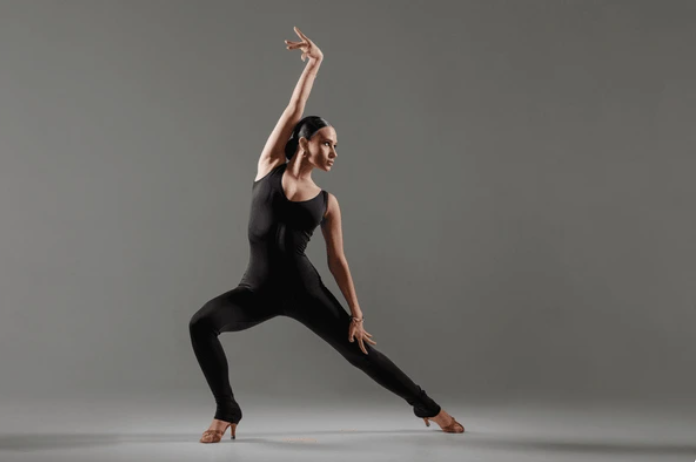
One of the most common questions we hear from students at Vegas Ballroom Dance is, “How can I practice if I don’t have a partner?” It is a fair question, because ballroom and Latin dancing are partner-based by nature. The connection, coordination, and shared rhythm between two people are at the heart of what make these dances so beautiful. However, the truth is that you can make remarkable progress on your own.
Solo practice is not just possible, it is essential. Many of the skills that make someone an elegant and confident dancer begin in the body of the individual. Balance, posture, timing, musicality, frame, and footwork can all be strengthened without a partner. When you finally do dance with someone, you will feel more grounded, more aware, and more capable of leading or following.
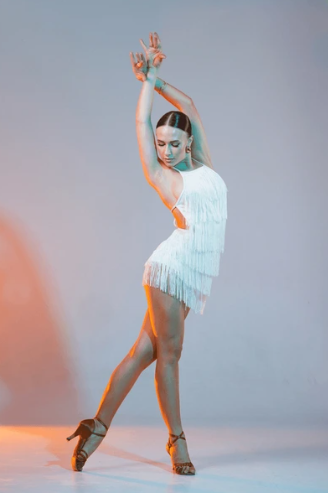
Whether your goal is to improve your confidence in social dancing or prepare for competition, you can use this guide to create a structured solo practice routine that builds real results.
Why Practicing Alone Matters
Before we get into drills, it helps to understand why solo practice is so effective. Dancing with a partner is a partnership between two independent bodies. If either dancer lacks control or balance, the connection becomes unstable. When you practice on your own, you are strengthening your half of the partnership. You develop coordination, precision, and timing that make it easier to dance smoothly with someone else later.
Practicing alone also gives you the freedom to slow down and repeat difficult movements without worrying about keeping up with another person. You can focus deeply on technique, one small detail at a time. Many professional dancers spend hours each week practicing solo, refining posture, timing, and body actions so that their partnered dancing feels effortless.
Setting Up Your Solo Practice Space
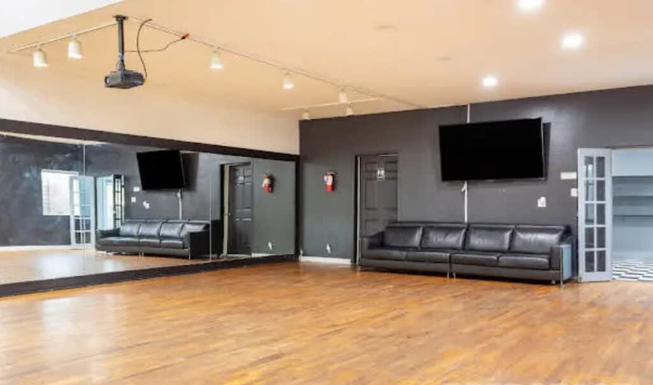
You do not need a ballroom to practice effectively at home. A small area with smooth flooring and enough space to take a few steps in each direction is enough to start.
Here are a few tips for setting up your space:
Clear an area about 8 feet by 8 feet if possible
Use a mirror or record yourself so you can see your posture and presentation
Wear your dance shoes or smooth-soled shoes similar in feel
Play music at the correct tempo for the dance you are working on
Keep a small notebook or phone notes app to record drills and progress
Core Skills You Can Improve on Your Own
No matter what style you dance, the following areas form the foundation of good technique. They can all be developed through solo practice:
Posture and silhouette
Balance and weight transfer
Foot placement and floor pressure
Hip and body action
Timing and musicality
Arm styling and coordination
Frame strength and connection awareness
These skills benefit every ballroom and Latin dance, from waltz and tango to cha cha and rumba.
Part 1: Ballroom Drills for Solo Practice
In Ballroom, your body carriage, balance, and frame are everything. Since you stay in closed hold most of the time, your ability to maintain posture and movement quality independently is vital. Solo drills for ballroom focus on how to move gracefully while staying centered and controlled.
1. Posture Alignment Drill
Start by standing with your feet together, arms at your sides. Imagine a string pulling upward from the top of your head. Your shoulders should relax down and back, and your rib cage should be lifted without arching your back. Engage your core lightly and make sure your weight is centered over the balls of your feet.
Hold this posture for 30 seconds, breathing naturally. Then, take a few slow steps forward and backward while maintaining alignment. Notice if your shoulders begin to rise or your back starts to sway. Reset as needed.
2. Rise and Fall Drill (Waltz and Foxtrot)
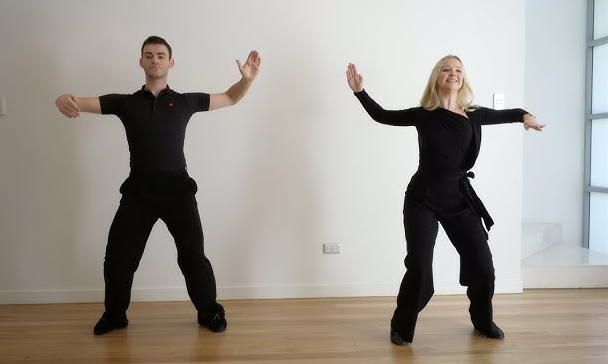
Rise and fall is the smooth elevation change that gives ballroom dancing its floating quality. Without a partner, you can still practice this using slow counts.
Start in a neutral standing position. Slowly rise onto the balls of your feet for two counts, then lower back down for two counts. Repeat this motion, keeping your knees soft and avoiding bouncing. Once this feels natural, try taking small steps forward while maintaining the same smooth rise and fall pattern.
This exercise improves calf strength, balance, and the elasticity needed for waltz and foxtrot.
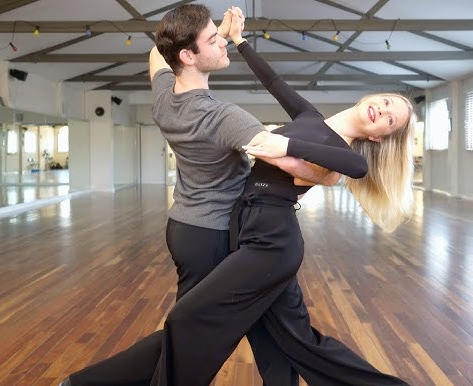
3. CBM Drill (Tango and Quickstep)
CBM, or "Contra Body Movement," is the rotation of your torso opposite to the moving leg. It helps create powerful, clean turns. Stand with your weight on one foot. As you step forward with your right foot, rotate your upper body slightly to the left. Repeat slowly on each side.
Do this with focus on keeping your hips and shoulders connected but not rigid. The movement should feel controlled, not forced.
4. Feather Step Drill (Foxtrot)
The feather step is one of the most classic patterns in foxtrot. You can practice the body mechanics solo by walking in slow, controlled steps, maintaining rise and fall and a consistent frame position.
Take three walking steps on counts “slow, quick, quick.” Focus on staying balanced over your standing leg and gliding your feet smoothly across the floor.
5. Shadow Practice for Frame and Movement
Stand in your ballroom frame position as if holding a partner, even though no one is there. Keep your elbows lifted and shoulders relaxed. Imagine your partner’s presence as you move through basic patterns. Feel where your weight shifts, and keep your head position steady.
Practicing your frame alone strengthens the muscles around your shoulders and back. It also trains your body to keep good form automatically when you eventually dance with a partner.
Part 2: Latin Drills for Solo Practice
Latin dances—cha cha, samba, rumba, paso doble, and jive—require strong control over hip movement, leg action, and timing. These dances often use more independent body motion than ballroom, which makes solo practice especially valuable.
1. Rumba Walks
Rumba walks are one of the best solo exercises for Latin dancers. They build leg strength, control, and balance while teaching the body how to coordinate hips and feet.
Start with your feet together. Step forward with one foot, letting the heel lift naturally from the back foot. As you transfer weight, roll through the ball of your front foot and let your hip settle on the supporting leg. Alternate feet slowly to the count of “2, 3, 4...1.”
Focus on control and smoothness rather than speed. Over time, your balance and hip movement will improve dramatically.
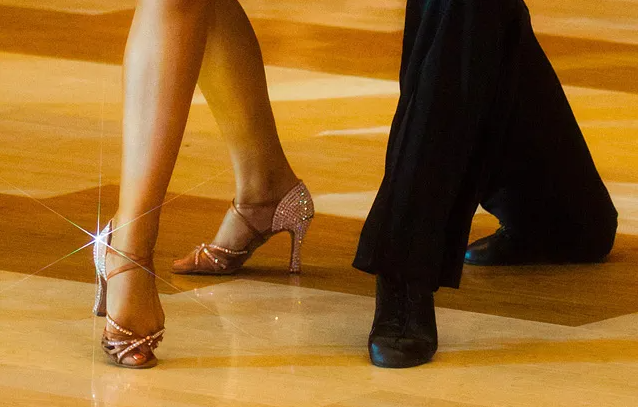
2. Cuban Motion Focus
Cuban motion is the natural rolling action of the hips that comes from bending and straightening the knees in Latin dances. Stand with your feet together, bend one knee while keeping the other straight, and feel how your hip naturally drops on the bent knee side. Then alternate legs slowly.
Repeat to a slow cha cha or rumba song, focusing on the smooth, continuous movement.
3. Samba Bounce Action
Samba uses a rhythmic "bounce" in the knees and body that gives the dance its springy quality. To practice, stand with your feet slightly apart and bend both knees gently. Begin to pulse up and down to the count of “1 & 2 &.” The movement should come from the knees and ankles, not the shoulders.
Keep your upper body lifted and relaxed as you bounce. When done correctly, your body will feel rhythmically engaged with the music.
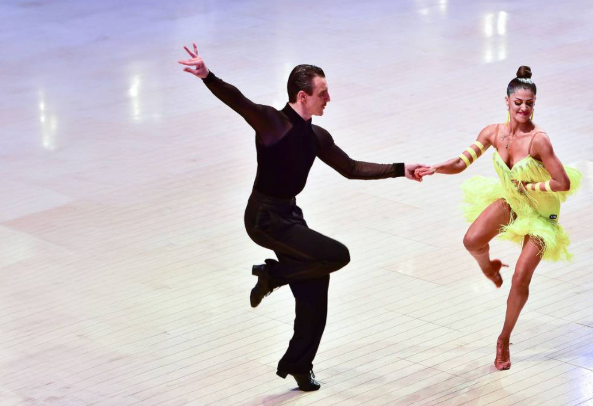
4. Jive Kick Drills
For jive, practice basic kick actions to build stamina and leg coordination. Stand tall, then lift one knee and extend the foot in a small, sharp kick. Alternate legs on counts of “1, 2, 3, 4.” Avoid large movements; focus on sharp, snappy kicks and lightness on your feet.
This drill is great cardio and builds endurance for faster dances.
5. Arm Styling and Coordination
Latin dances often use expressive arm movements that complement the body action. Practice moving your arms smoothly from your center rather than just lifting them from your shoulders. Imagine energy flowing from your back through your fingertips.
Practice this in front of a mirror to make sure your arms look coordinated and natural. Use different rhythms or songs to change the feel.
Part 3: Musicality and Expression
Practicing alone also gives you a chance to focus on musicality, which is the way you interpret and move with the music. Many dancers underestimate how much this matters, but musicality is what makes dancing feel alive.
Try these exercises to develop your musical awareness:
Listen to a song and identify its rhythm and accents
Clap or tap your feet to the basic beat
Practice dancing basic steps to different songs of the same dance to understand how tempo and mood change your movements
Record yourself dancing and check if your body matches the phrasing of the music
Bringing It All Together with a Partner
When you finally return to partnered practice, you will feel the difference. Because you have developed balance and timing independently, you will be easier to lead or follow. Your frame will feel stronger and more consistent, and your movements will align naturally with your partner’s rhythm.
Even just ten minutes of solo practice a day can speed up progress faster than you might imagine.
Conclusion
Dancing without a partner might feel unusual at first, but it is one of the best ways to grow as a dancer. Solo practice gives you the time to refine your posture, strengthen your balance, and connect more deeply to the music. Every great dancer has spent countless hours training alone, building the skills that make their partnered dancing shine.
Whether you are learning waltz or rumba, foxtrot or cha cha, practicing alone will help you dance with more confidence, grace, and precision. The floor is always open, even if you are the only one on it.
If you want guidance, structure, or personalized feedback on your solo practice, join us at Vegas Ballroom Dance. Our instructors can show you exactly how to make the most of your time between lessons and help you turn your living room into your own private ballroom.