Ladies: How to Choose your First Pair of Dance Shoes
If you are just starting out in Ballroom or Latin dancing, you do not necessarily need a dedicated pair of dance shoes right away. Plenty of beginners take their first several lessons in regular shoes while they figure out whether this is something they want to stick with, and there is nothing wrong with that approach. But once you know you are going to keep dancing, a proper pair of dance shoes makes a real difference. They change the way your feet connect with the floor, how confidently you can lead, and how much control you have over your own footwork.
Before getting into the differences between Latin and Ballroom shoes, it helps to understand the things that apply to dance shoes generally: what the sole is made of, why that matters, how a dance shoe is supposed to fit, and what is actually going on inside the shoe that makes it perform the way it does. Once those fundamentals are clear, the differences between the styles make a lot more sense, and shopping for your first pair becomes a much less confusing process.
A quick note before we get into it: we are not sponsored by any dance shoe company, and nothing in this article is a recommendation of a specific brand or product. This is general guidance to help you understand what to look for when you go shopping, whether that is in person at a dancewear store or online.
Why Suede Soles Matter
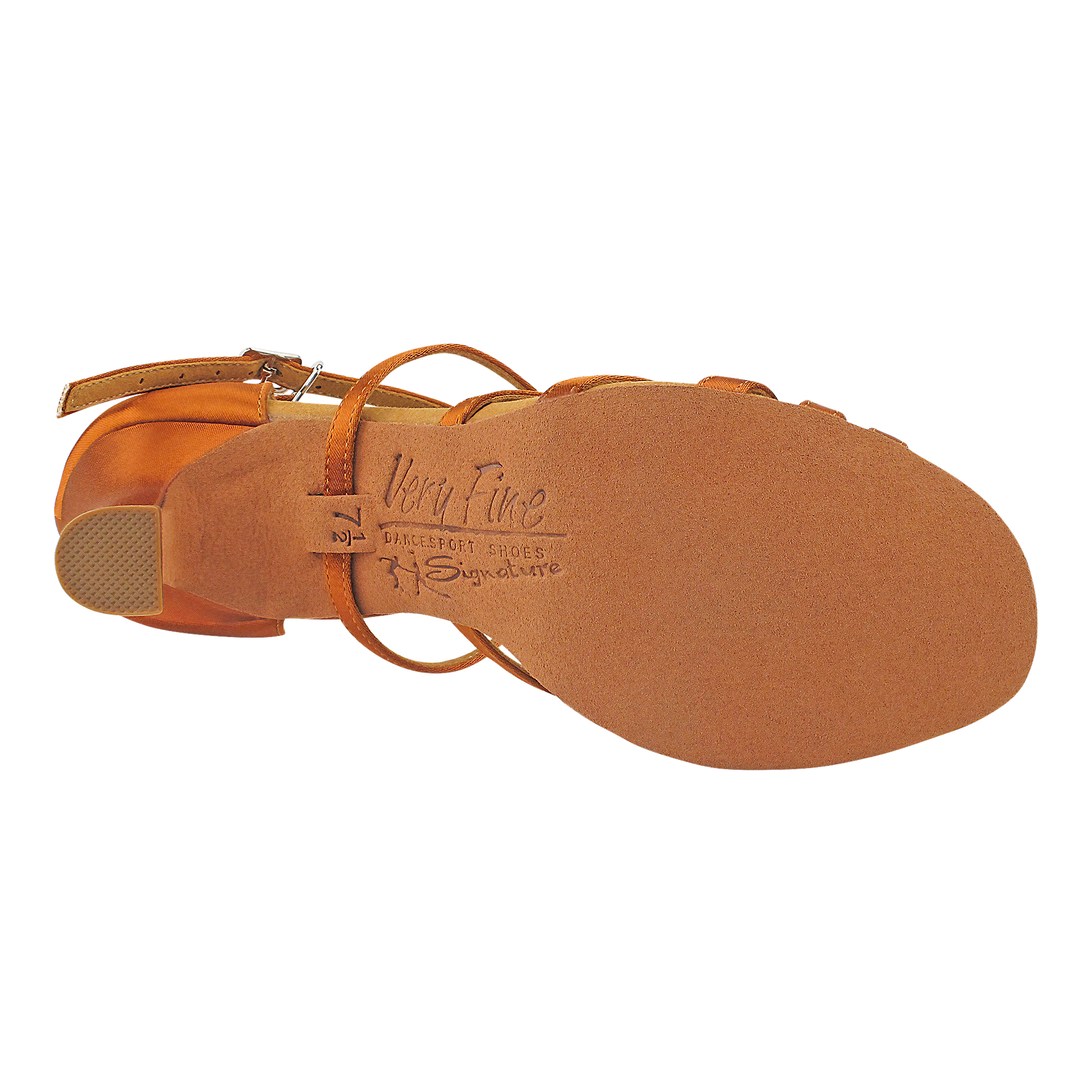
Nearly every dance shoe, regardless of style, has a suede sole, and this is one of the most important things to understand before buying a pair.
Suede creates a controlled balance of glide and grip that a dance floor requires, and it sits right in the middle between two materials that each fail in their own way. A plain leather sole, the kind found on a typical dress shoe, is actually too slippery on most dance floors. It glides easily but offers very little to push off against, which makes the floor feel unstable and unpredictable underfoot. A rubber sole, like the kind found on a typical athletic shoe, has the opposite problem. It grips the floor too well, which means the foot cannot swivel naturally, and turns end up requiring far more force through the knee and ankle than they should. Suede lands in between, offering enough grip to push off and change direction with confidence while still allowing the foot to rotate and slide smoothly through turns and pivots.
One rule worth knowing from the start is that suede-soled dance shoes should never be worn outside. Stepping onto pavement or any rough outdoor surface grinds grit directly into the suede and damages the fibres in a way that is difficult to reverse. Once that happens, the sole starts behaving unpredictably, sometimes grabbing the floor when you need it to slide, and sometimes sliding when you need it to hold. Treat your dance shoes as indoor-only footwear from the day you buy them.
What Is a Shank, and Why Does It Matter?
This is a term that comes up constantly when talking about dance shoes, and most people have never heard of it before they start shopping for a pair.
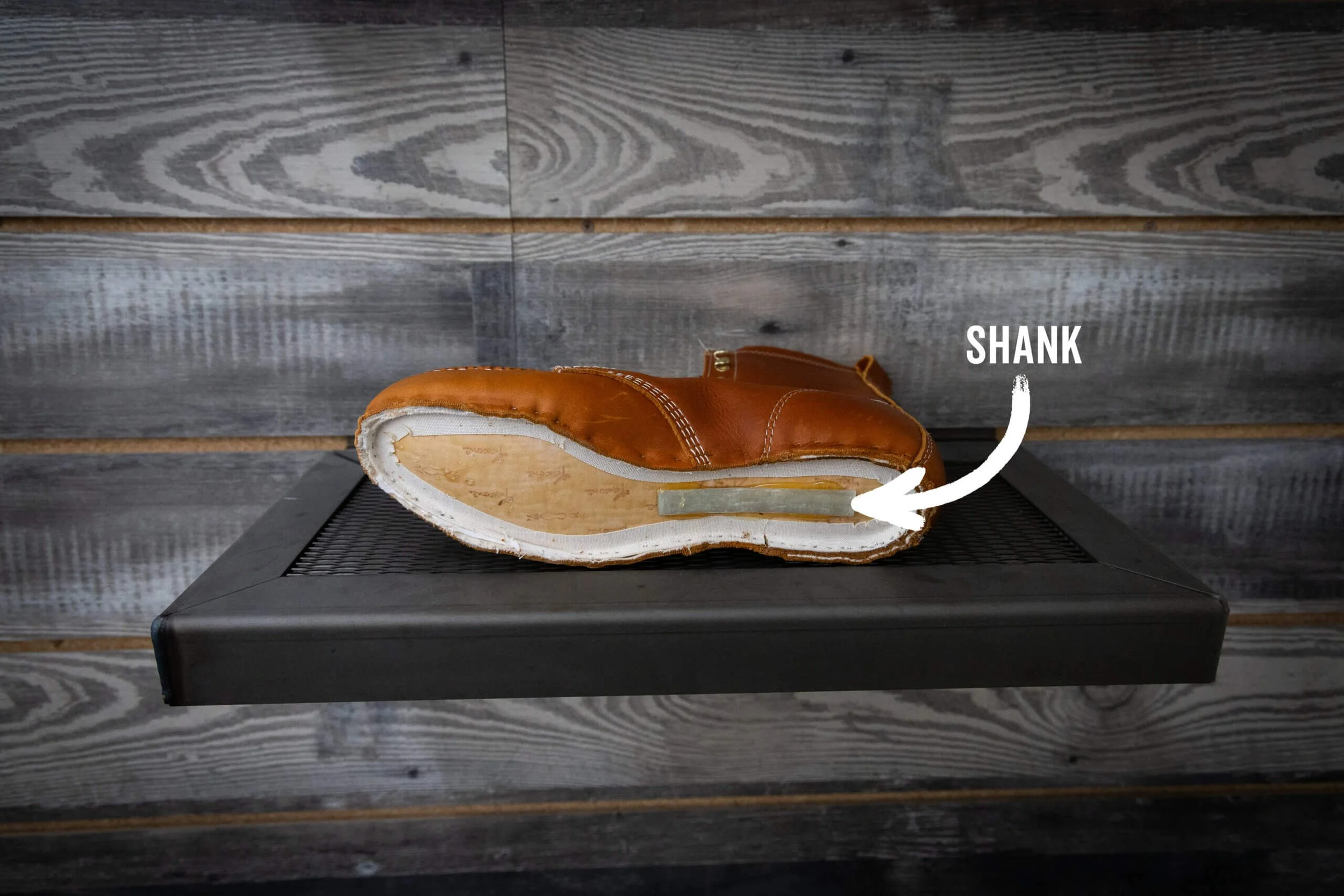
A shank is a strip of rigid material, often steel, fibreglass, or a stiff plastic, built into the sole of the shoe between the insole and the outsole. You cannot see it from the outside, but you can feel its effect the moment you put weight on the shoe. The shank's job is to control how and where the sole of the shoe is allowed to bend.
A shoe with a full shank running through the middle of the sole resists bending through the arch and only flexes naturally at the ball of the foot. This supports a smooth, controlled roll through the foot, from heel to toe, which is exactly the quality that good Ballroom technique depends on. A shoe with no shank, or only a short partial one, bends much more freely along its entire length. This allows the foot to point and arch far more dramatically, which is exactly what Latin dancing requires and what a heavily reinforced sole would prevent.
This single difference in construction, more than almost anything else, explains why a Latin shoe and a Ballroom shoe feel so different underfoot even when they look broadly similar from across the room. A shoe that feels stiff and resists bending in the arch when you press on it has a shank. One that folds easily along its length does not.
How Dance Shoes Should Fit
Dance shoes fit very differently from everyday shoes, and getting this right matters more than most new dancers expect.
A dance shoe should fit close to the foot, almost like a sock, with no dead space at the heel, no extra width on either side, and no gap across the top of the foot. The shoe and the foot should move as a single unit. Any looseness in the fit translates directly into a loss of control, because the foot is shifting around inside the shoe instead of the two moving together.
At the same time, a properly fitted dance shoe should never be painful. The toes need enough room to lie flat and stay relaxed without being squeezed or curled under. If a shoe is causing discomfort, the issue is the size or shape, not something that improves with a break-in period.
This often means going down a size from what you would normally wear in street shoes. Many people walk around every day in shoes that are noticeably too large, because a little extra room feels comfortable for standing and walking and nobody ever has a reason to question it. That same room becomes a real problem in a dance shoe, where precision matters far more than casual comfort. When you go to try on dance shoes, do not assume your usual size is the right starting point. Expect to end up a half size or even a full size smaller, and judge the fit by the criteria above rather than by what feels roomy and familiar. We will go into more specifics for how Latin shoes and Ballroom shoes should fit in the next sections.
Latin Shoes
Latin shoes are strappy, high-heeled sandals worn for dances like Cha Cha and Samba, and they are built specifically to support the technical demands of Latin dancing.
The most important feature of a Latin sandal is its flexibility. Latin dancing requires the foot to articulate fully, pressing through the ball of the foot, pointing through the arch, and extending through the toes. As covered above, Latin sandals are built with little to no shank, which allows the foot to move through that full range of motion.
The heel on a Latin sandal is high and narrow, typically between 2.5 and 3.5 inches. This shifts the body's weight forward over the ball of the foot, which is exactly where Latin dancers want their weight to sit. Dancing on the ball of the foot allows for quicker footwork, sharper hip action, and the characteristic lightness that good Latin dancing requires. A lower heel would pull the weight back toward the heel and work against the technique.
One detail that surprises many new dancers is the relationship between the shoe and the toes. In a properly fitted Latin sandal, the toes extend slightly beyond the end of the shoe. When the foot fully points and then retracts, the toes need to travel in a continuous line with the shoe. If the shoe were long enough to contain the toes fully, that line would be broken, and the pointed foot would look disconnected. The shoe is designed to disappear into the line of the pointed foot, not to frame it from underneath.
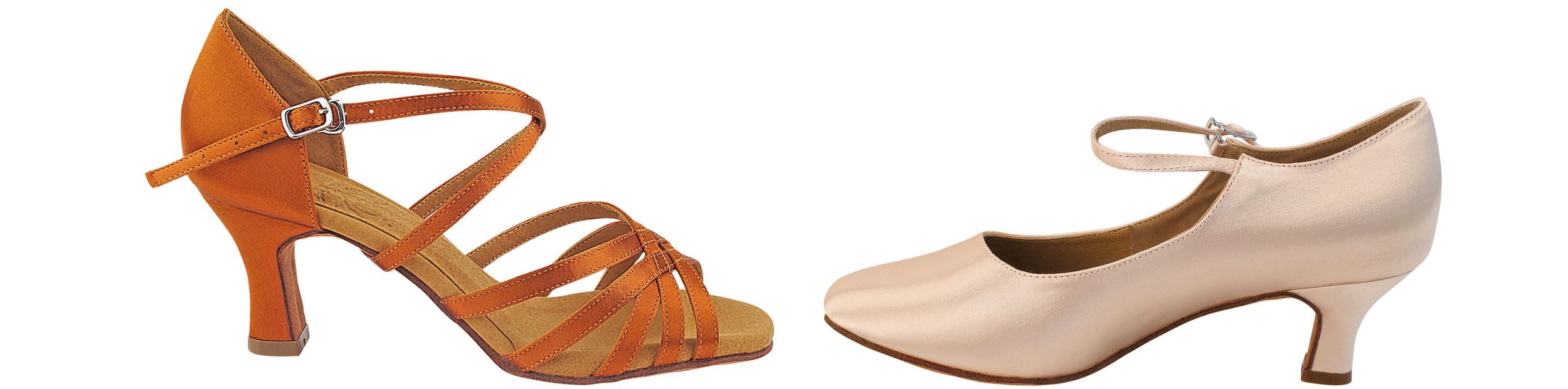
Latin shoes on the left; Ballroom on the right
Ballroom Shoes
Ballroom shoes are pumps worn for dances like Waltz and Tango, and their construction reflects very different technical demands than a Latin sandal.
Where Latin sandals are built for flexibility and forward weight, Ballroom pumps are built for stability and support. Ballroom dancing involves a significant amount of heel contact with the floor, and many steps begin with a heel strike. As covered above, Ballroom pumps typically have a full shank, which gives the shoe the rigidity needed to support that contact without collapsing.
The heel on a Ballroom pump is lower than on a Latin sandal, typically between 1.5 and 2.5 inches, and broader at the base for additional stability during heel steps. The shape is still elegant and elongates the line of the leg, but the priority is function over height.
Ballroom pumps also have a closed toe, which serves a very practical purpose. In partner dancing, feet share a small space and collisions happen, particularly while learning. A closed toe protects your foot from your partner's foot and vice versa. Latin sandals can get away with an open design because there is typically more space between the dancers, and steps are generally taken from the ball of the foot firs. In Ballroom, however, your feet will be much closer to your partners, he will often be stepping directly toward you, and he will be stepping from the heel, so your toes and toe nails need to be protected.
Smooth Shoes
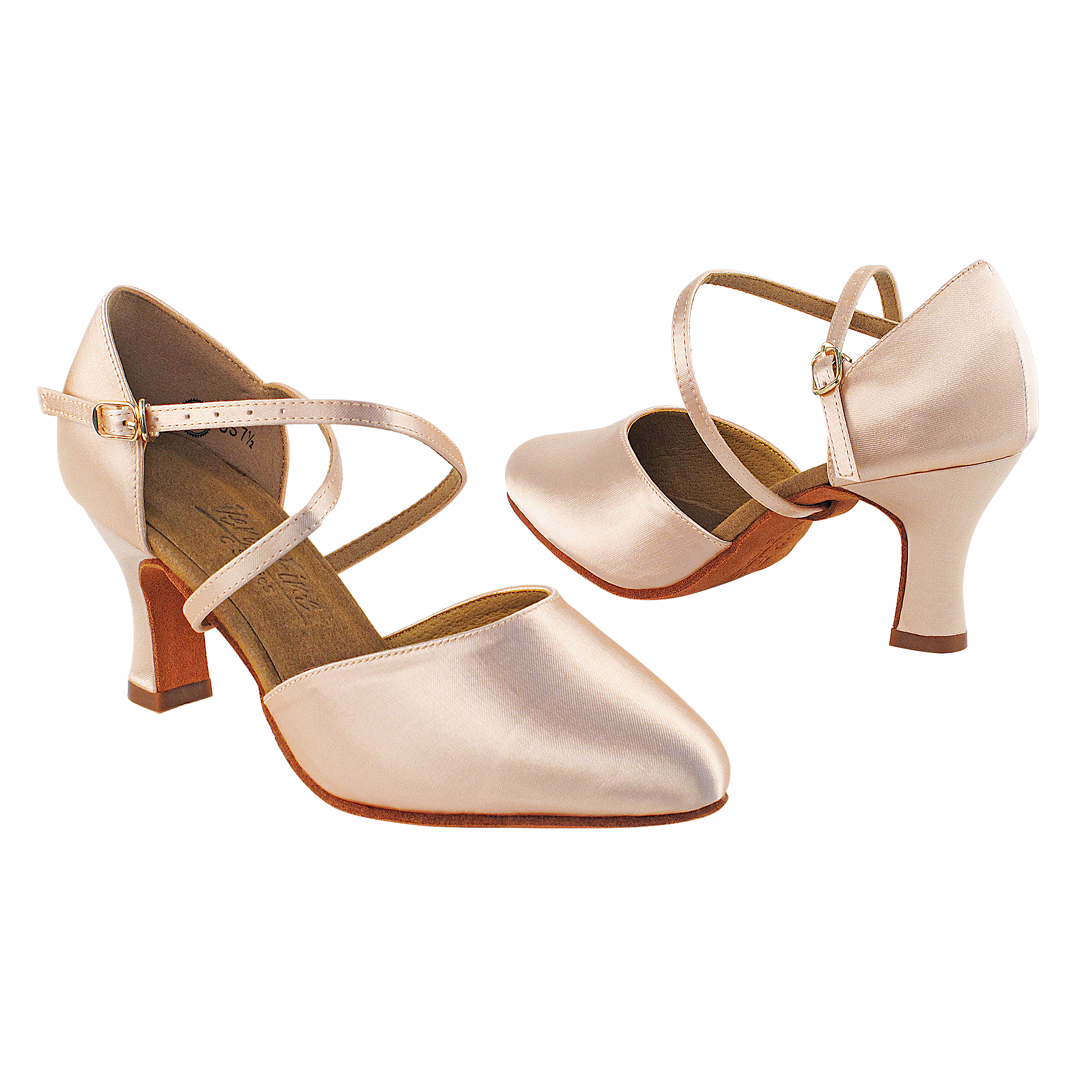
Smooth shoes are a hybrid between Ballroom and Latin shoes, used in dancing a sub-style of Ballroom danced in America, called American Smooth, which contains variants of dances like Waltz and Foxtrot.
American Smooth has technical elements of Ballroom and of Latin, as well as other styles of dance. The closed toe is necessary to protect the toes, just like in Ballroom, because of the close proximity between the partners and the manner in which the steps are taken, which is just like Ballroom. On the other hand, foot point is important for many of the solo elements of the dance which use technique closer to Latin, so the middle of the shoe is open and it is often more flexible throughout. They often have a narrower, latin like heel, but they don’t get too high otherwise taking heel steps would be too hard.
Those thinking of using Smooth shoes as a compromise shoe for dancing Ballroom and Latin should know: Smooth shoes will be slightly worse than Latin shoes for Latin, because they don’t allow for as much foot point; and they will be worse for Ballroom than dedicated Ballroom shoes, as the heel is often less stable and they often lack a shank.
Why Some Female Teachers Wear Men's Latin Shoes
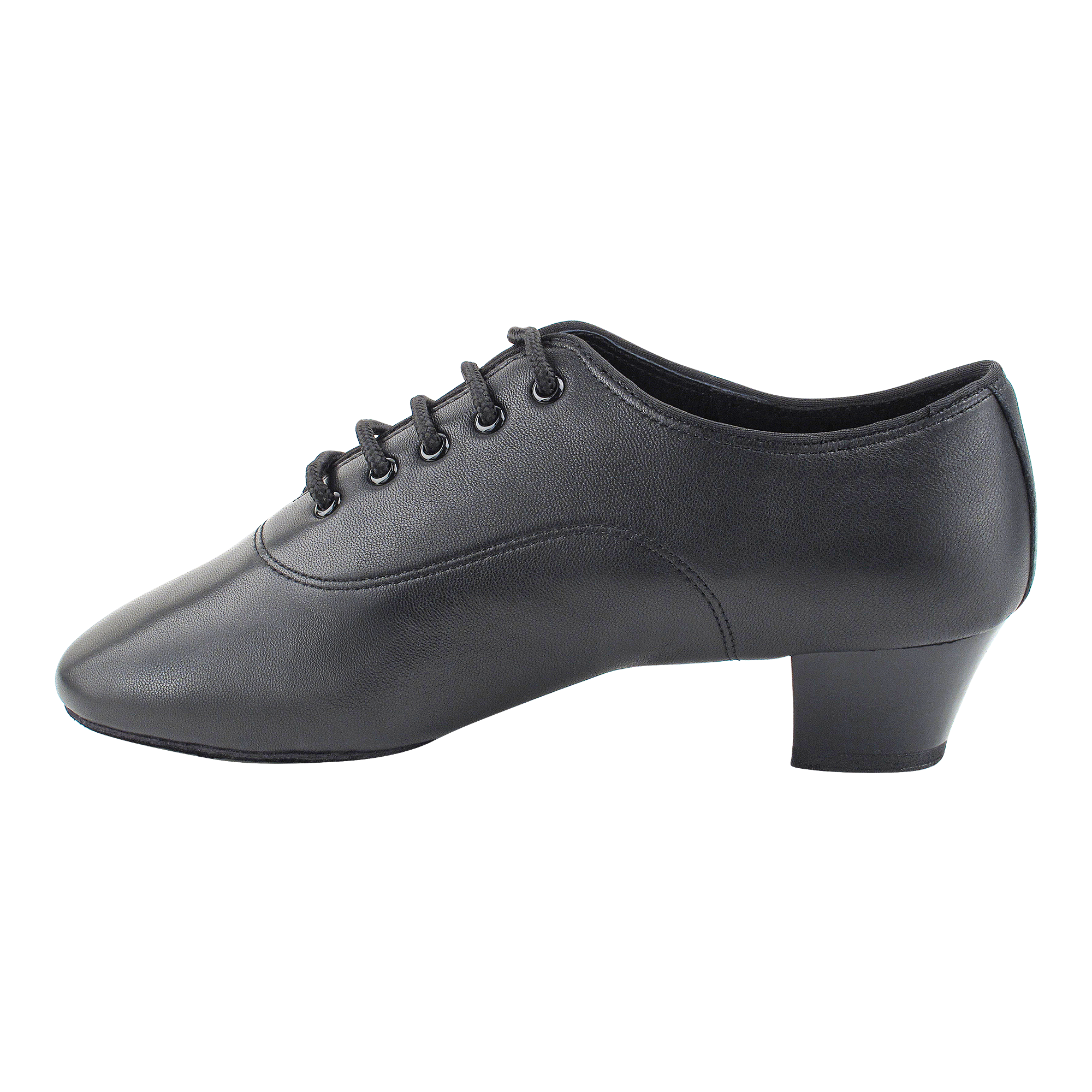
If you spend time around a dance studio, you may notice that some female teachers, whether they are teaching Latin or Ballroom, wear what appear to be men's shoes: a closed, low-profile Latin shoe rather than a strappy sandal. This is a deliberate choice, and it makes a lot of practical sense.
Firstly, leather shoes are much more durable than the satin that women’s shoes are often made from, and that adds up after thousands of hours of use. These shoes are also made to be worn with socks, and since the leather lasts so long, this prevents odors from building up. Finally and perhaps most importantly, standing in high heels for 8 hours a day is hard enough, let alone teaching in them. A men's Latin shoe offers a lower, wider heel to distribute weight more evenly. The tradeoff is the open, elegant look of a sandal, which matters far more in performance than during a full day spent walking students through their footwork for the hundredth time.
If comfort, not performance, is the priority for your first pair of dance shoes, we wouldn’t recommend wearing Men’s Latin shoes. Instead, look into practice sneakers.
Practice Sneakers
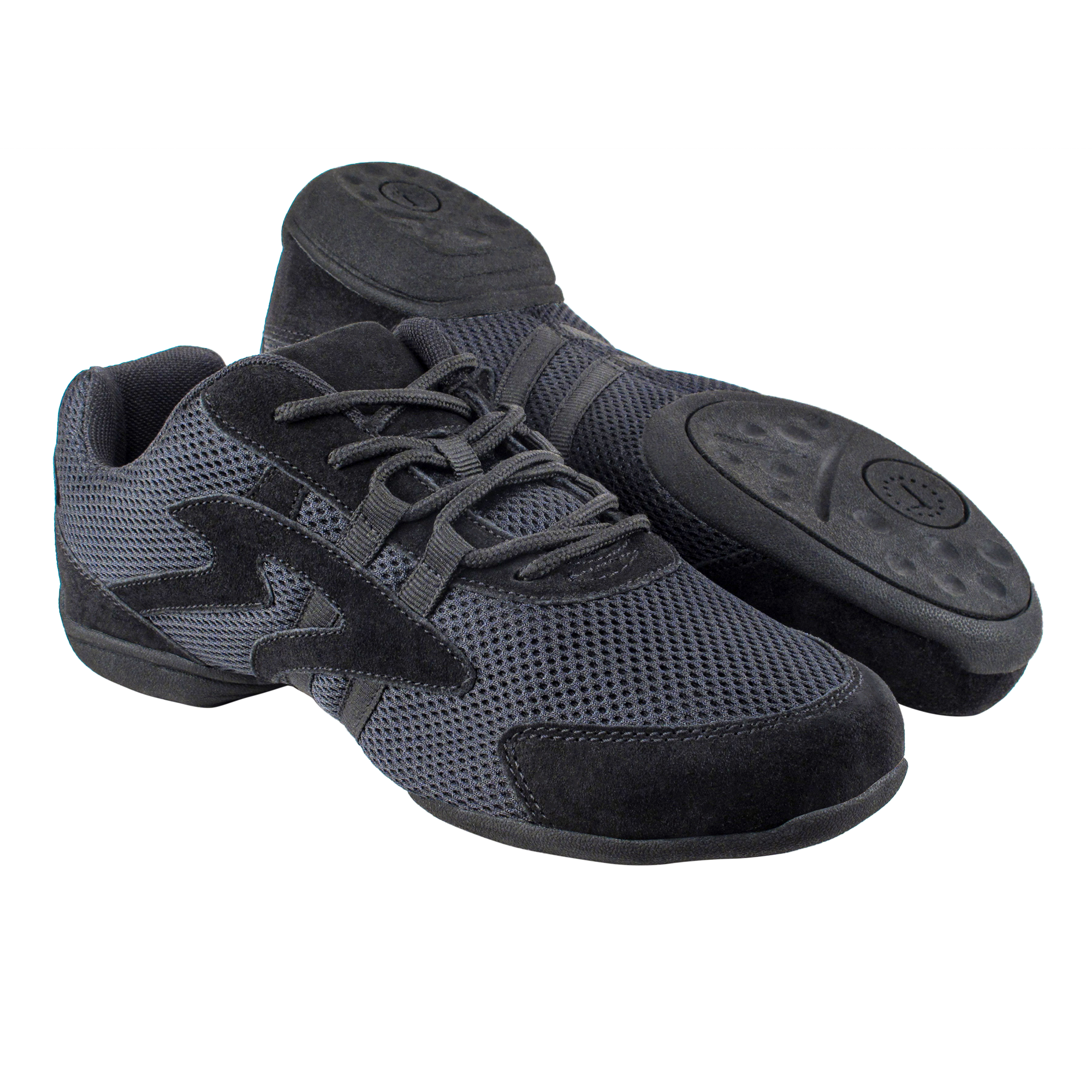
These shoes look and feel like normal sneakers, and are most useful for a few specific situations. Dancers dealing with foot problems, whether a structural issue, an old injury, or general discomfort, often find a dance sneaker far more comfortable than a regular dance shoe, since the soles tend to be more cushioned underfoot. Dancers attending an intensive or a multi-day camp, where they may be dancing for eight hours at a stretch, often dance in dance sneakers so as not to wear out their feet too quickly. Teachers, frequently on the floor for hours at a time, are another group that may rely on practice sneakers for the same reason. In any case, the trade off is that you will not be able to feel the floor as well as with a normal shoe, and your foot will not be held as snugly either.
A proper dance sneaker is not, however, just a regular athletic shoe. While some have suede on the bottom like a normal dance shoe, most use a polyurethane sole that provides a controlled amount of slide compared to the high-grip rubber sole found on standard sneakers, allowing the foot to rotate naturally.
While the soles of these shoes won’t be destroyed if you wear them outside, like suede soles, doing so can track dirt onto the dance floor and cause a problem for the shoes of your fellow dancers.
Which Pair to Buy First
If you are new to dancing and working on both Latin and Ballroom in your lessons, you do not need both pairs right away. If you can only buy one pair to start, Latin sandals are generally the betterchoice for a beginner. It will be more difficult to take driving heel steps in Ballroom and roll through the foot, but the other option is worse: it is nearly impossible to properly dance Latin in Ballroom shoes, due to the lack of flexibility in the shoe.
You could also use a Smooth shoe as a compromise shoe, but as discussed it too has its problems, and eventually you’ll end up buying a dedicated pair of each shoe.
Materials, Color, and What to Spend
Other than dance sneakers, Ladies dance shoes are typically made of satin, chosen for their flexibility and their ability to move with the foot, as well as its more formal look. In terms of color, the basic color for Ballroom pumps is nude, and for Latin sandals they can be nude or bronze. Black, white, or other colours may be appropriate for a showcase, but for your first pair a more neutral and common color is recommended. Avoid shoes with rhinestones as your first pair, as they can easily fall off and drastically reduce the life of your shoes.
On the topic of price, you do not need to buy the most expensive pair on the shelf for your first pair of dance shoes. A mid-range pair from a reputable dancewear retailer will serve a new dancer perfectly well. What you should avoid is the absolute cheapest option you can find. Those shoes are often built with thinner materials and weaker construction, and it is common for them to start falling apart, at the sole, the straps, or the heel, within just a few months of regular use. Spending a little more upfront will almost always save you money in the long run.
A Note on Heel Protectors
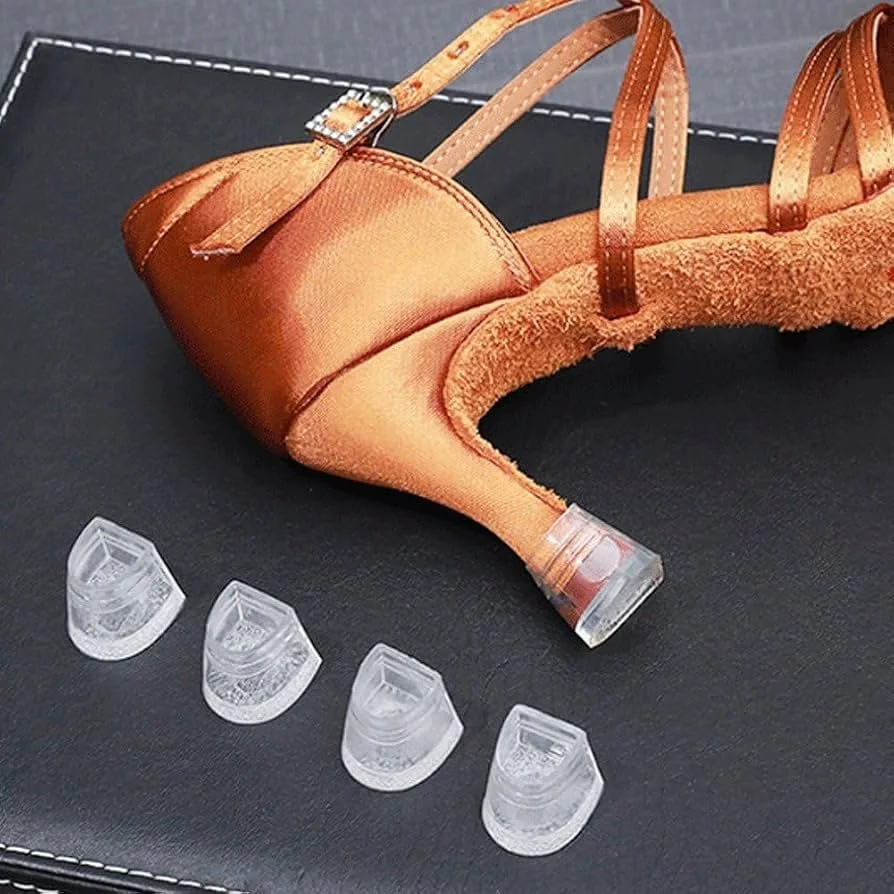
Any shoe with a high heel will benefit from heel protectors: small rubber or plastic caps that fit over the tip of the heel. These cost only a few dollars, and prevent your heel tips from wearing down and needing to be replaced.
Investing in the right pair of dance shoes, fitted properly, makes a real difference once you have decided this is something you want to keep doing. They will not replace good technique or good instruction, but they will stop getting in the way of both. Whatever pair you end up choosing, the goal is the same: a shoe that disappears into the background of your dancing rather than something you are constantly working around.