
Overcoming Two Left Feet: Debunking the Myth of Natural Talent
Almost every new student at a dance studio says some version of the same sentence before the first lesson starts. “I have two left feet.” “I have no rhythm.” “I’m just not a dancer.” They say it with a laugh, but they mean it, and they are bracing for a long, awkward lesson.
Then something happens that surprises almost all of them. Within the first lesson, they are dancing. Not stumbling through a routine, not counting under their breath in panic, but moving with a partner, in time, to real music. They are leading and following like they never thought they could, annd they walk out confused about why they were so worried.
Dancing is much easier than most people think. This post explains why, why the myth of natural talent has stuck around anyway, and why we at Vegas Ballroom Dance are comfortable putting our money where our mouth is.
The Guarantee
At Vegas Ballroom Dance, we guarantee that any new student will be dancing the basics with the music by the end of their first lesson. If you are not, you get your money back.
We can say that without losing sleep because of who is teaching and how they teach. Our instructors are all award-winning dancers with years of experience, and they have taken countless beginners from “I can’t do this” to full blown dancing. If you don’t believe us, you can check out their profiles here! Being a great dancer and being able to teach a nervous beginner are different skills. Thankfully our teachers have both. They know where beginners get stuck, they know how to break a movement into pieces small enough to feel easy, and they know how to keep a first lesson fun instead of overwhelming.
The guarantee also reflects something we have seen over and over. People who walk in convinced they cannot do it are consistently surprised by how much they can do. It is one of the most reliable parts of our job.
Everyone Started at Zero
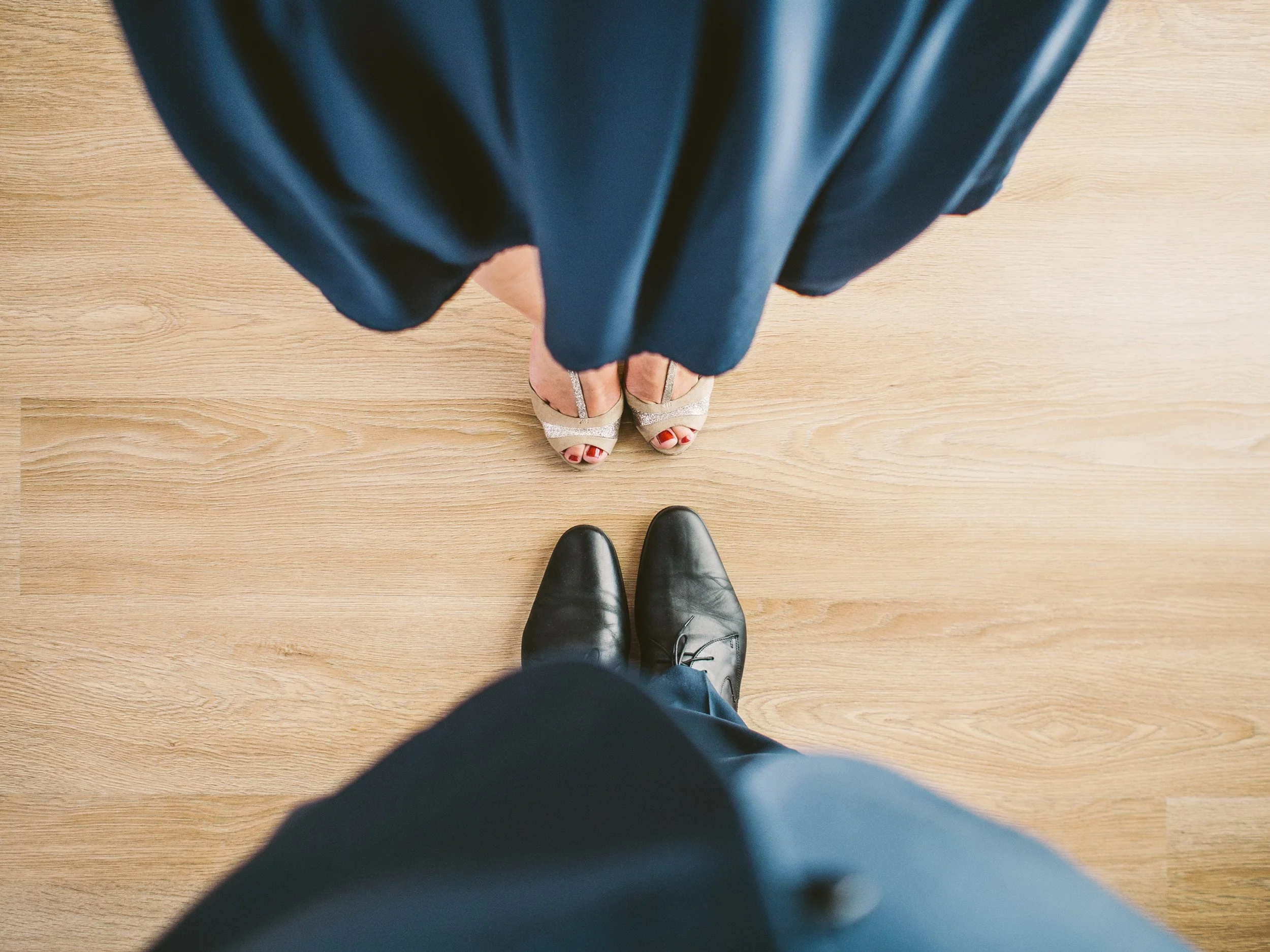
Here is the simplest fact in this whole post, and the one people forget most often: nobody is born knowing how to dance.
There is no one in the world who came out of the womb able to do a cha cha basic or lead a waltz box step. Every dancer you have ever admired, on a competition floor, on television, or across the room at a wedding, started out unable to do any of it. They had to learn where to put their feet, how to count the music, and how to move with another person. The same is true of the instructors at our studio. Every one of them was once a complete beginner who felt clumsy and unsure.
So when a student tells us they are not a natural, the honest answer is that no one is. Some people come in feeling confident and some come in feeling terrified, but everyone is starting from the same place: a blank slate and a willingness to try.
Why Great Dancers Make it look So Easy
If everyone starts at zero, why does it look like some people have a gift?
Because of what you are not seeing. When you watch a polished international waltz, a sharp quickstep, or a West Coast Swing dancer playing with the music, you are seeing the end result of a lot of practice, with the work edited out. The effortless quality is real, but it is the product of repetition, not a sign that the dancer skipped the learning stage.
It is also true that some people are more coordinated than others, and those people often pick things up a little faster at the start. A teacher will see it in the first ten minutes. But a faster start is not the same as a closed door. Being quicker at learning a step does not make the step unlearnable for everyone else. It just means some students get there a bit sooner, and both groups end up dancing. The basics of every dance are built from small, repeatable patterns, and any beginner can learn them with good instruction.
Think about it the way you would think about learning to drive. Some people are a little more comfortable behind the wheel on day one, but nobody concludes that everyone else should give up on driving. With a good instructor and a little practice, almost everyone gets there.
Why the Basics are Easier than you Expect
There are a few reasons beginners get moving so quickly, and none of them require any special talent.
The basics really are basic. The foundation of each dance is a short, repeating pattern. A cha cha basic, a samba whisk, a foxtrot feather step, a waltz box: these are small patterns that repeat. Once your body has the pattern, you are dancing. Everything else, the styling, the turns, the speed, is built on top of it later.
Good teaching removes the intimidation. Learning one small piece at a time, slowly, with clear feedback, makes a new movement feel manageable. Most of the fear people carry into a first lesson comes from imagining that they will be thrown into something complicated. That is not how we teach.
The music does half the work. Once you can find the beat and count, the music gives your body a structure to follow. Rhythm is not a single magical ability that you either have or lack. It is a set of skills, hearing the beat, understanding how the music is grouped, and landing your steps on it, and those skills develop fast when someone shows you what to listen for.
You are not doing it alone. In partner dancing, you have another person to connect with. A lot of beginners find this makes things easier, because their attention is on the partnership instead of on worrying about their own body.
What a First Lesson Looks Like
Every lesson is a little different depending on the dance and the people in the room, but a first lesson generally follows a simple arc.
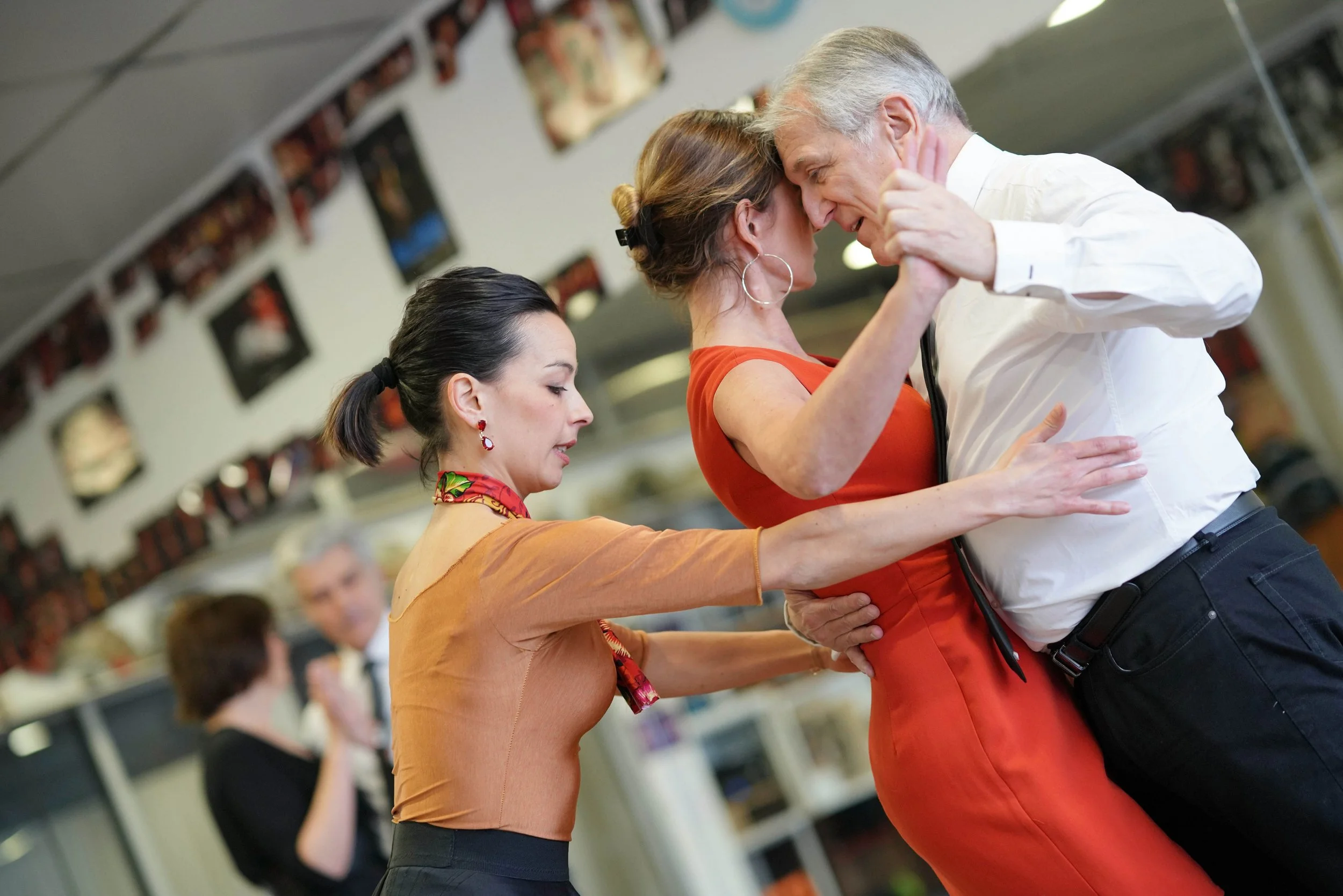
You start with the basic step of the dance, slowly, with no pressure. Your instructor shows you the pattern, you try it, and you get small, specific corrections. Next comes the count, so you know where the beat is and how the steps fit into it. Then the music goes on, and you do the same step you have just learned, now in time. For most students this is the moment of surprise. They realize they are already dancing.
From there, depending on the dance, you may start working with a partner, learning how a simple lead and follow feels, and trying a basic pattern or two. Throughout, the goal is the same: you leave having actually danced, not having watched a demonstration.
If you’d like a more in depth idea of what to expect at your first less, check out this blog post!
“But I have no rhythm”
We hear this one constantly, so it deserves a direct answer. In our experience, the students who say they have no rhythm have simply never been shown how to find the beat in the style of music they are dancing to. Once someone points out what to listen for and gives them a count to attach their steps to, most of them find the rhythm quickly.
If you want to get a head start, here are a few things that help. Listen to the music you will be dancing to when you are not dancing, in the car, at home, anywhere. Tap along. Count out loud in class, even if it feels silly. And when you are learning a new step, get the timing first and worry about the style later.
It will also help if you pick one dance and stick with it until you learn the basics. We teach a lot of different dances at Vegas Ballroom Dance, and part of the reason is that people connect with different styles for different reasons. If you are planning for a wedding, a night out, or a trip, you might want something social and quick to pick up. If you love a particular kind of music, start with the dance that matches it. If you enjoy a challenge, there are dances with a lot of depth that you can grow into for years. Whatever you choose, the basics come first, and the basics are the part we promise will click in your first lesson.
Beyond the First Lesson
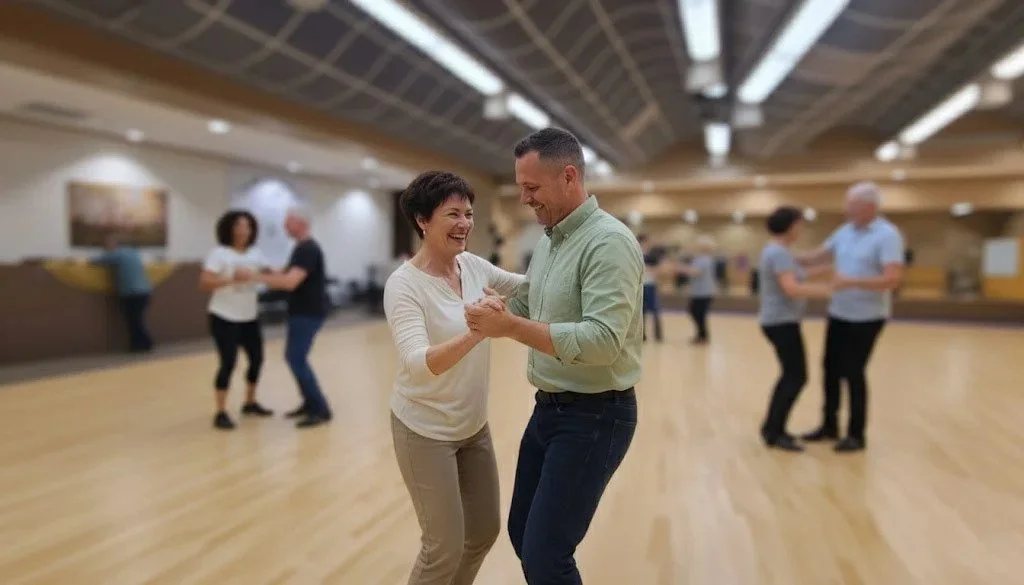
Once you have the basics, the rest is about how far you want to take it. Some students are happy knowing enough to feel comfortable at a party. Others get hooked, add more dances, and start competing. Neither path is better. What they share is that improvement comes from the same simple ingredients: showing up regularly, practicing a little between lessons, asking your instructor for feedback, and being patient with the occasional plateau. Progress in dance is rarely a straight line, and a stretch where nothing seems to improve is often followed by a class where something suddenly clicks.
A few habits make the biggest difference. Ten minutes of practice in the kitchen between lessons does more than one long session the night before class. Dancing with different partners at social events teaches you to adapt in a way that practicing with one person never will. And recording a short clip of yourself on your phone is humbling but useful, because what feels like a big movement is often small, and your instructor can help you see the difference.
Dancing is also simply a good time. It gets you moving, it gets you out of the house, and it puts you in a room with friendly people doing something fun together. Plenty of our students come for a specific reason, like a wedding or an anniversary, and stay because they enjoy it.
Come See for Yourself
If you have been telling yourself that you cannot dance, we understand. Most of our students said the same thing at some point. But the idea that dancing is only for people with natural talent is a myth. Everyone started where you are, and the people who look effortless are the ones who got a good teacher and put in the practice.
Book your first lesson at Vegas Ballroom Dance, tell us you have two left feet if you want to, and let our instructors show you how quickly it comes together. By the end of the lesson, you will be dancing!
